
The Maegen Stone of Mainstone
It's been a while! I've been a bit quiet recently, but there's some cool stuff to talk about – there are a couple of guest articles to highlight, nice updates to older articles, and some research into the Húsafell Stone's weight that has a much weirder conclusion than I could ever have expected when I first set out to tell the story.
Here's this letter's topics, feel free to jump to the ones that interest you most:
- The Maegan Stone of Mainstone
- The Old Loans Stone
- Light article refreshes
- The Húsafell Stone's weight
- The Gathering X
The Maegan Stone of Mainstone
Calum Stott is back with another guest article featuring an English stone! I know this one has been in the works for a long time, so I'll let Calum tell you about it.
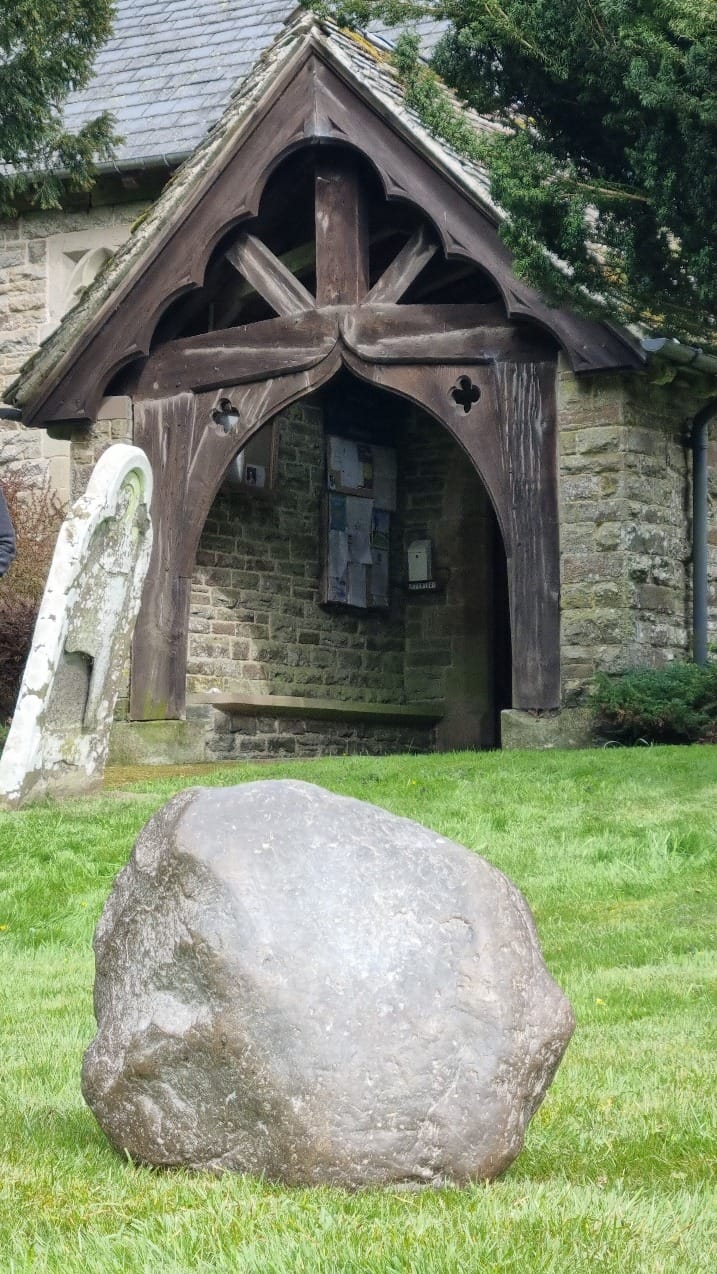
By Calum Stott:
I can't wait to share this article with you all as it's been well over a year in the making! I first heard about the Maegen Stone back in January 2025 and got down to see and lift the stone a couple of months later in March. Since then, it's taken many months of research, writing, and editing to turn it into something I'm really proud of.
This is the second guest article I've written for liftingstones.org now, after The Lonton Egg & Teesdale Feat Stone, which we published almost exactly two years ago in October 2024! That first article focussed more on the story of how I came to research and find the two stones.
This time I was inspired by Peter Martin's work in Twixt the Stone and the Turf, particularly his chapter Understanding the Language of the Stones where his focus on the nomenclature and etymology on the names of stones was fascinating to me. Whilst he may have believed that stonelifting in England was lost to the depths of time, I hope that this article would have convinced him otherwise.
As with any hobby, the strains of life, work, and other interests kept getting in the way – our small farm has kept me quite busy alongside spending time with my wife and two boys. It's certainly been a labour of love, tracking down old books that are no longer in print and getting in touch with numerous contacts to help pin down information or confirm a hypothesis; the process was slow and required patience and persistence.
One of the greatest hurdles was attempting to track down why, when, and who first suggested the Maegen Stone was "used as the measure for a bag of wheat" as this was its only mention by Historic England. I went down a deep rabbit hole – looking into medieval grain measurements, calculating the weight of a bushel of wheat from 14th to the 19th centuries and trying to apply it to various standardised weights – only to discount the theory altogether and remove a large section from the article. It can be disheartening to remove so much time and effort from a piece of work, but when it adds nothing of substance to the writing, there's no point in keeping it in.
So, with many more stories to tell and stones to seek out, I'll leave you with my research into the Mægen Stān – its naming, its folklore, and its community.
 Calum Stott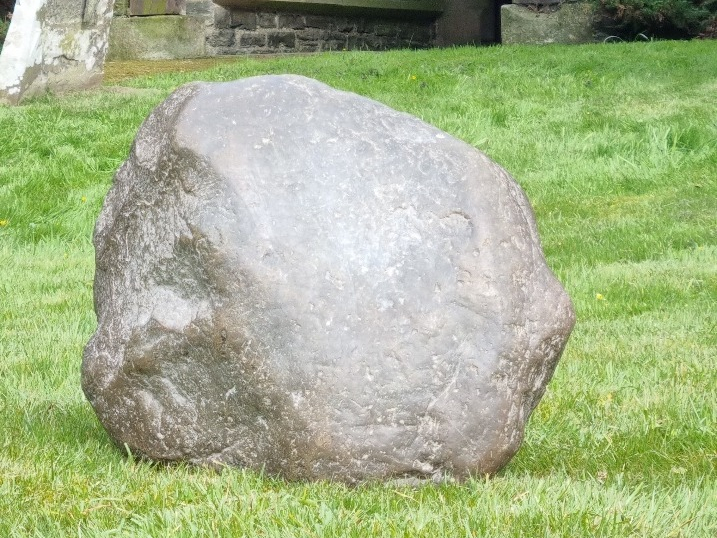
If you enjoy Calum's article, don't forget to follow him on Instagram if you aren't already!
The Old Loans Stone
How would you feel if you spent years lifting and researching dozens of historic stones, only to discover one buried a few hundred meters from your childhood home? That's exactly what happened to David Brodlie, who shared his story of the Old Loans Stone back in June. I'll let David tell you more.
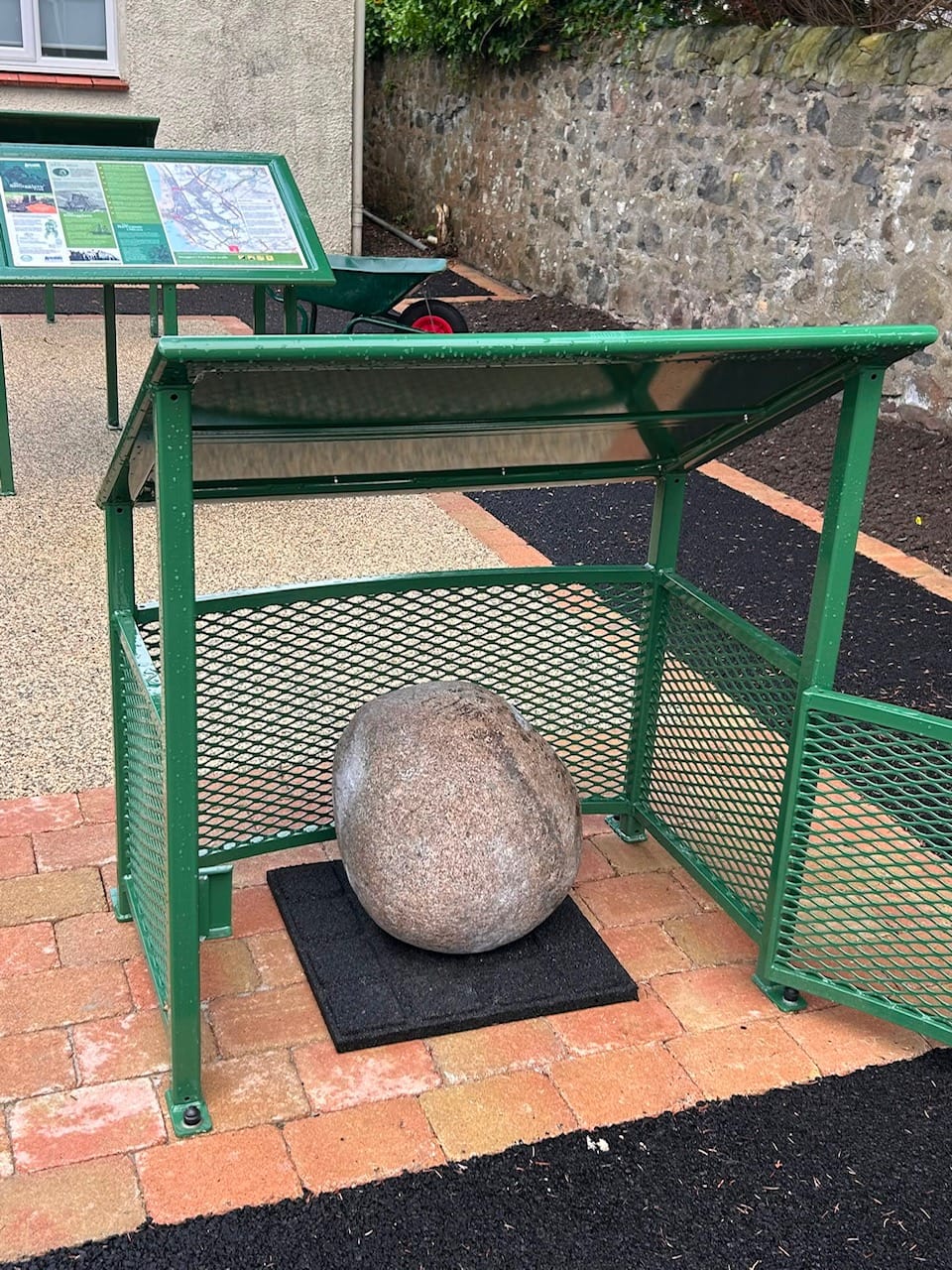
By David Brodlie
The story of the Old Loans Stone is one that has spanned generations of stonelifting enthusiasts. We’re a strange breed when you try to explain to someone in a pub exactly why you enjoy travelling hours on end to stand in some remote part of the country and lift a stone that nobody else would give a second glance. But, like most good tales, once you explain the back story, it often grips the listener. And this is exactly the case with the Old Loans Stone. Only this stone sits right in the heart of Ayrshire.
In the early 2000s, Peter Martin came across research documenting a stone that lay half-buried in the pavement of the small village of Loans. It was so unassuming that passers-by barely gave it a second glance. I know this for a fact, because I did exactly the same thing. I grew up in Loans. I walked past it countless times on the way to school, to play with friends and to visit the shop, completely unaware of what lay next to my feet.
As with many lost stones, however, the real challenge is often not finding them, but securing their future. Modern bureaucracy, competing interests and the simple difficulty of getting the right people around the same table can make progress incredibly difficult.
But the story of the Old Loans Stone is different.
Over a four-year period, what began as an attempt to rescue a forgotten stone has developed into a remarkable example of what can be achieved through cooperation, persistence and a shared desire to preserve a small piece of local history. It has become a blueprint for how cross-organisational coordination can work to save a lost relic of the past.
Having spent almost a century forgotten and buried in the ground, the Old Loans Stone has now returned to the hands of those who appreciate what it represents. With more than 40 successful lifts already recorded, this is the fascinating story of how I, alongside a number of others, helped rescue, relocate and give a new lease of life to the Old Loans Stone.
 David Brodlie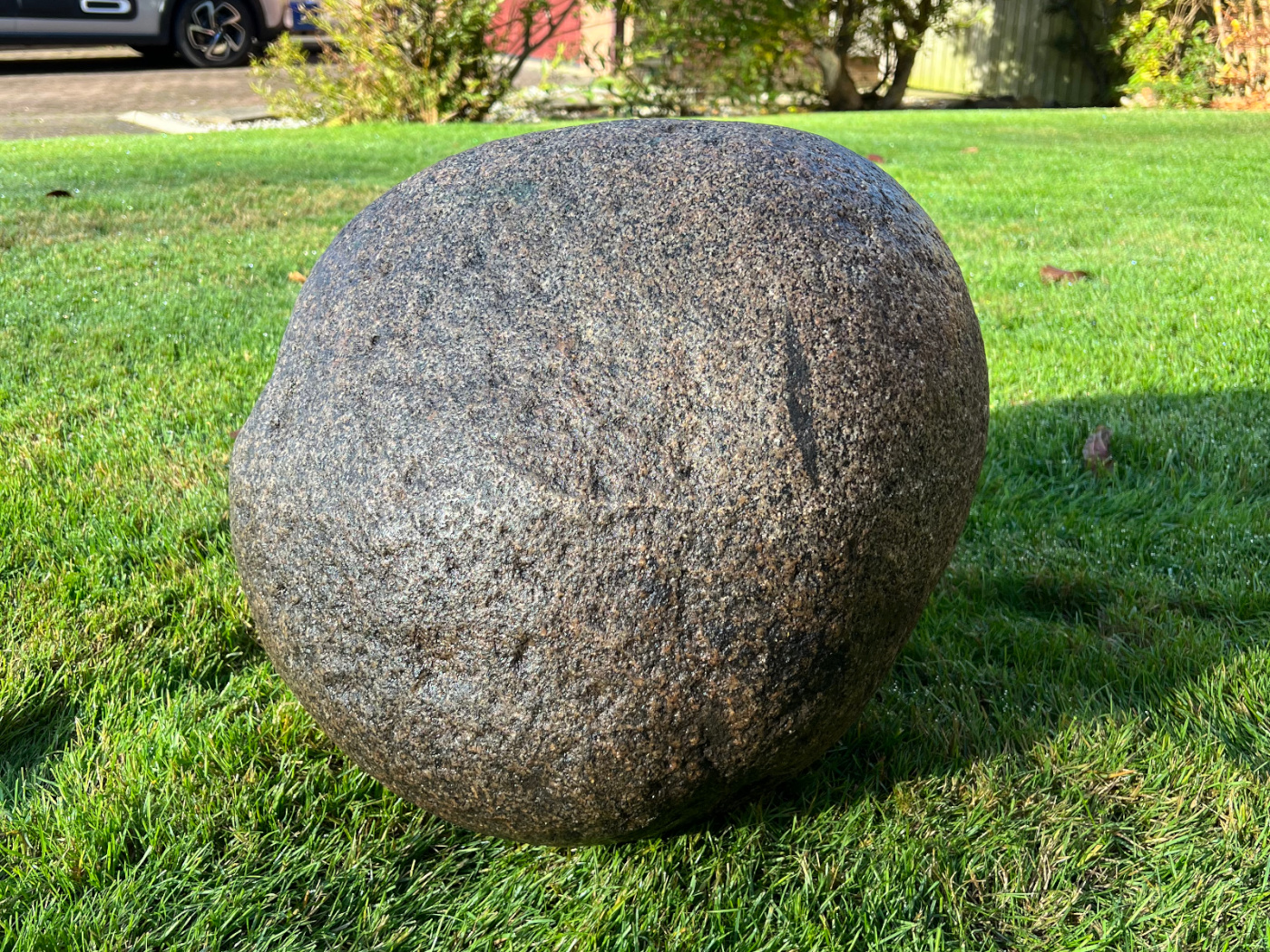
Light article refreshes
Rounding out the article announcements, I've lightly refreshed a couple of articles on the site with new photos, small additional details, and some writing style tweaks over the last few months. If you haven't read them before, now's a good time!
 Dave Brown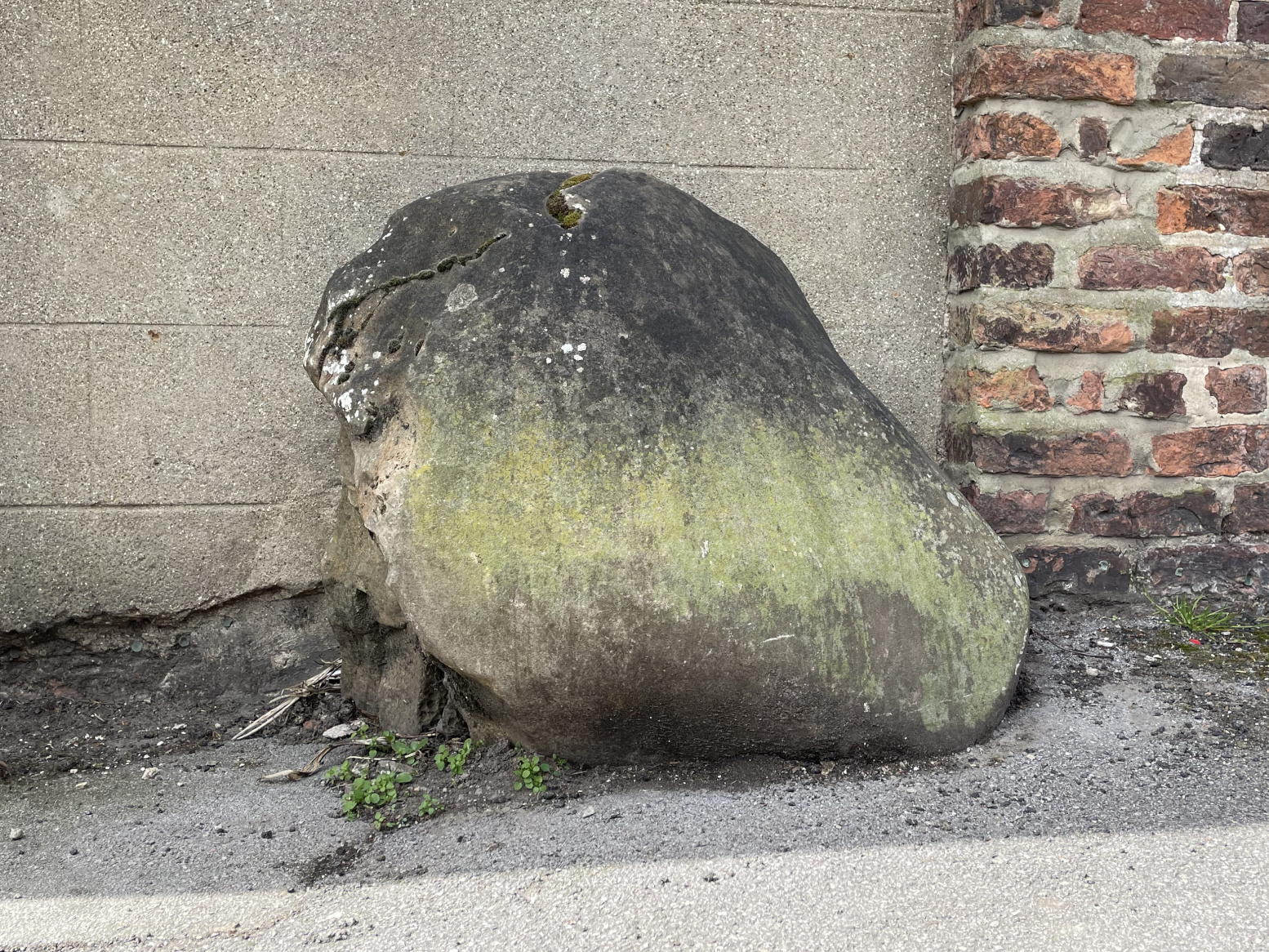
 Dave Brown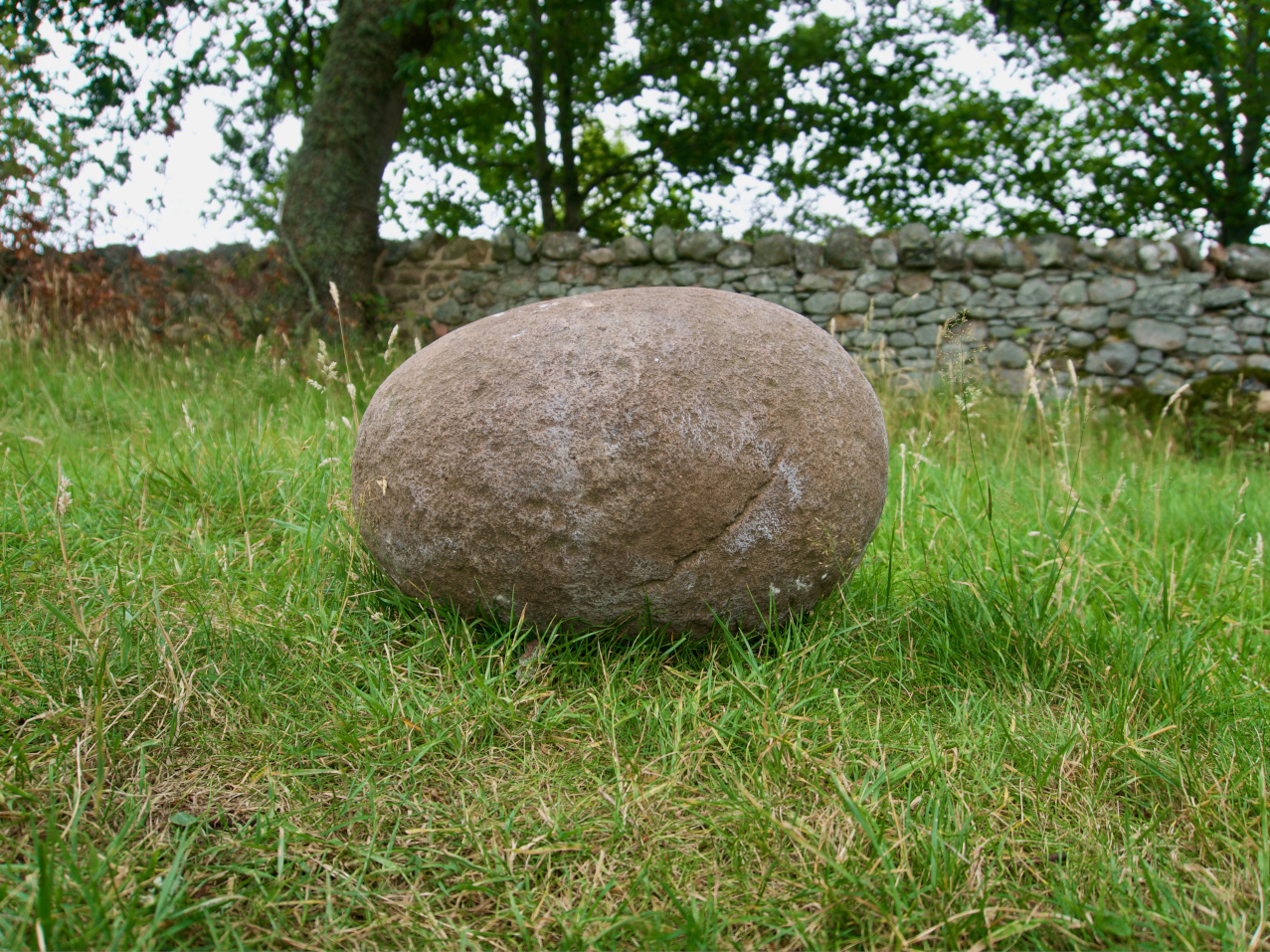
The Húsafell Stone's weight
Back in July a few stonelifters visited the Húsafell Stone and weighed it. The reading was 346.4 lb (157.1kg), well below the commonly stated weight of 186kg (410 lb) that the community has accepted for years.
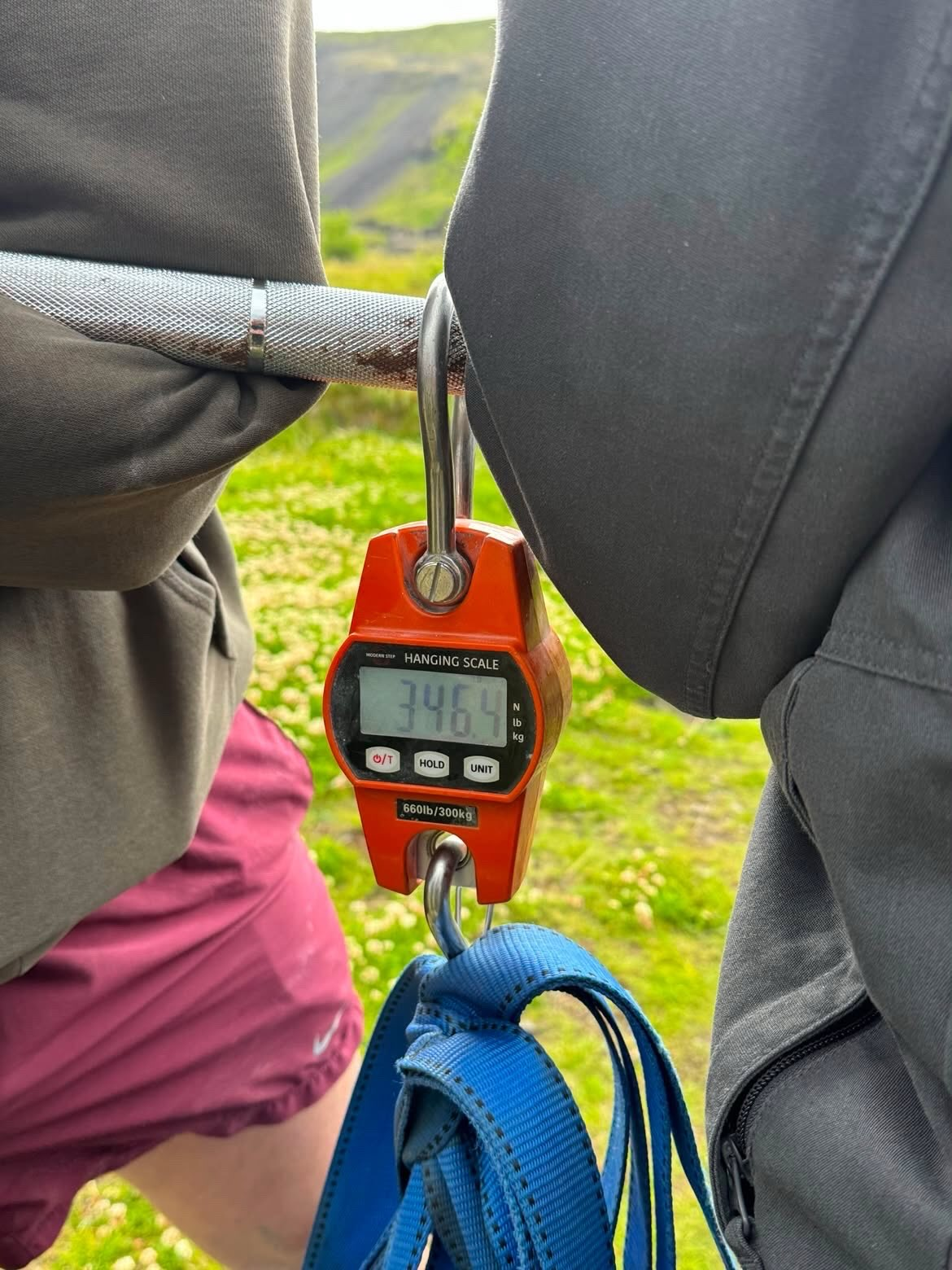
For some reason this caused excess drama, including anger towards people sharing the information (though I don't know the extent of it because I didn't go down that rabbit hole). The Húsafell Stone remains the Húsafell Stone. If you've completely changed your view on the Húsafell Stone's challenge solely based on the figure next to some units, you might want to reflect on why you feel that way.
Over the years, several people have commented that lifting the 154kg (340 lb) Fullsterkur stone in Dritvík was more difficult than lifting the Húsafell Stone to their chest, so seeing the Húsafell Stone's corrected weight at 157kg isn't that surprising to me.
The more interesting question for me is how the stone's weight became widely recognized as nearly 30kg (66 lb) heavier for decades. Minor weight fluctuation in stones is normal – different scales, a stone's porosity, and other conditions can affect a weight measurement by a couple of percent – but a huge discrepancy is different. I think I've found an explanation, but you'll never guess it, so you'll have to read on.
Let's start with how I came to report the weight as 186kg (410 lb). I wrote the original version of the Húsafell Stone article on liftingstones.org in early 2020, and I used different sources for the stone's weight:
- The 2018 documentary FULLSTERKUR, reporting the weight as 186kg (410 lb)
- The 2018 book STONELIFTING: An Ancient Test Of Strength Revived also reporting the stone's weight as 186kg (410 lb), pg 77.
- Rogue's Road to the Arnold video from 2019 telling the story of carving their replica reporting 410 lb (186kg) for the original stone.
So 186kg (410 lb) was the weight I settled on, given it was the weight I'd seen from multiple recent sources in a similar time frame. I suspect each of those sources restated the weight listed on the sign next to the folds, which has now been there since at least 2017 and possibly earlier.
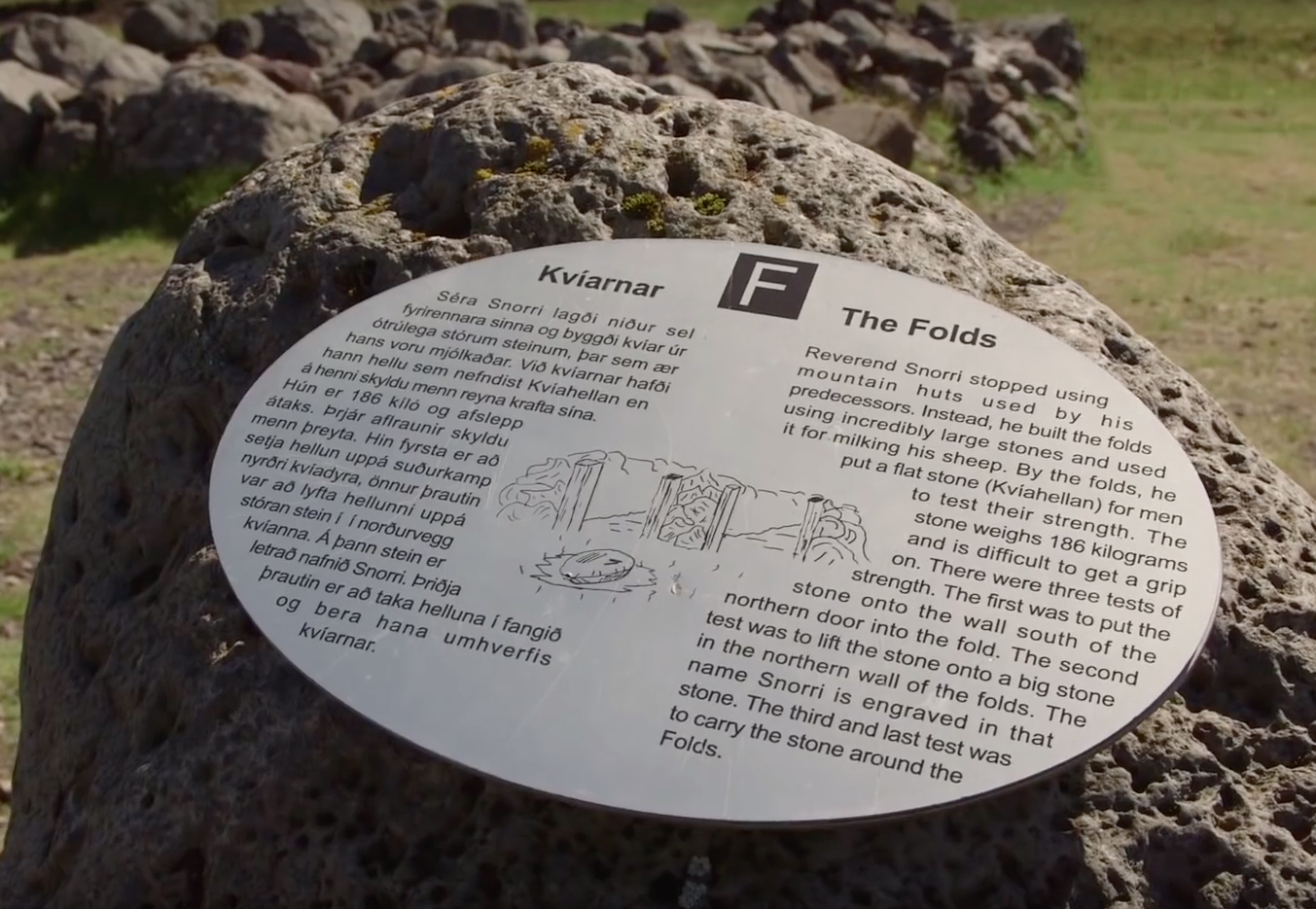
Prior to that, Páll Guðmundsson – a descendant of Snorri Björnsson – said the weight of the Húsafell Stone was 190kg (418 lb) in the 2004 documentary Kviahellen: The Pen Slab. Although, I'm unsure where that figure comes from.
Going back a little further to the 90s, we see two reported weights: 410 lb (186kg) – stated by the commentator of the 1992 World's Strongest Man broadcast – and 180kg (397 lb) in Of Stones and Strength, 1996.
The World's Strongest Man's stated weight is the earliest mention of 410 lb (186kg) I know of, so there's a chance that's where the 186kg figure originates. We'll come back to this later.
Unfortunately, Of Stones and Strength doesn't list a reference for the 180kg (397 lb) weight, however this post on Instagram sharing information from Gísli Már Gíslason, highlighted two old Icelandic sources that might explain it. Dave Nisbet then shared additional details in this post.
To understand where the 180kg figure comes from, we first need to look at the Húsafell Stone's first documented weight measurement in Kvíarnar á Húsafelli og aflraunasteinn séra Snorra ('The sheepfolds at Húsafell and Reverend Snorri’s lifting stone'), an article written by the great grandson of Snorri, Kristleifur Þorsteinsson, published in Eimreiðin, 1923.
Last spring I asked my two sons, Þorsteinn and Einar, to weigh the Kvíahella. They did so with the help of their kinsman, Þorsteinn Þorsteinsson, a farmer at Húsafell. They found that it weighed three hundred and sixteen pund.
Kr. Þ. (Kristleifur Þorsteinsson)
Since this article was published in 1923, "Last spring" likely refers to the spring of 1922. And while Iceland had officially transitioned to the metric system in 1912, the pund – equivalent to 0.5kg – still makes sense as a unit here. Therefore, the great great grandsons of reverend Snorri reported the stone as weighing 158kg (348 lb).
From here, we turn to Úr byggðum Borgarfjarðar II, a book written by Kristleifur Þorsteinsson, and prepared for print by one of his sons, Þórður. It was originally published in 1948. In the book the author reprints his Kvíarnar á Húsafelli og aflraunasteinn séra Snorra article, referencing the original 1923 publication as the source. However, the text about weighing the stone is different:
Last spring, the Kvíahella was weighed, and it turned out to weigh three hundred and sixty pund.
(Eimreiðin 1923.)
The original read "þrjú hundruð og sextán pund" (sextán, sixteen), while the reprint reads "þrjú hundruð og sextíu pund" (sextíu, sixty). Interestingly, the whole paragraph about weighing the stone changed, removing the sentence about who weighed the stone along with a few other adjustments, so it wasn't just the sixteen/sixty change.
So this later paragraph documented the stone as weighing 360 pund (180kg, 397 lb), giving us the number that spread. By 1978, Gestur Guðfinnsson's survey of Iceland's lifting stones was repeating the 360 pund (180kg, 397 lb) figure.
Here's some context from Kristleifur Þorsteinsson's preface, written in 1946 (emphasis mine):
I have written most of it from memory alone, having reached old age; I am now in my eighty-sixth year.
...
This volume, like the previous one of my pieces, has been prepared for printing by my son Þórður. He has gone about that work with interest and devotion. On close reading and revision of the pieces, a good many misprints and miswritings came to light, arising both from my own carelessness and from those who handled them after me. We, father and son, have tried to remedy this by reading through all the book's content together and correcting as we went whatever could be improved. Furthermore, we removed sentences or short passages in many places that seemed to be flaws or entirely superfluous.
Did the pair believe the original 316 pund figure was a misprint in itself? Did Kristleifur Þorsteinsson misremember the figure and believe the weight was greater? I'll note that Þórður wasn't one of the sons present when weighing the stone in 1922, so he wouldn't have had first-hand knowledge of the weighing.
Since publishing this letter, an article from 1932 written by Kristleifur Þorsteinsson corrects his 1923 article to say it actually weighed 360 pund – he blames the difference on handwriting:
The Kvíahella weighs, as near as has been determined, 360 pounds. In my Eimreiðin article it is given as 316 pounds, but that is not correct. I did not write its weight in figures, and "sixteen" was read for "sixty". The two words look alike if the handwriting is not very legible.
So it looks like Kristleifur Þorsteinsson carried that change into Úr byggðum Borgarfjarðar II.
If 360 pund was the correct figure, that would mean the stone has lost about 23kg (50 lb) of its weight since its original weighing and the original 'misprint' would have to coincidentally match today's weight almost exactly, which seems incredibly unlikely. Based on that, I'm not quite sure what to think.
That explains where the 180kg figure came from, but what about the 410 lb/186kg figure that we've come to know? That seems too specific to be random.
The Húsafell Stone at World's Strongest Man 1992
I'd like to preface this section with a note that there's a lot of speculation on my part based on the small pieces of evidence available. This part of the story had me like this at times as I dug into it:
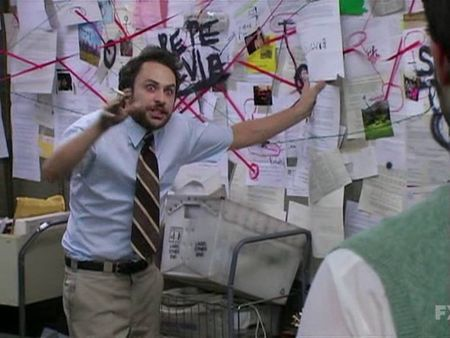
Therefore, if any new evidence presents itself, I'd happily drop this line of thought.
The 1992 edition of World's Strongest Man took place in Iceland where the final event of the competition was the Húsafell Stone carry – a fitting conclusion.
At the start of the Húsafell Stone carry event, with Gregg Ernst carrying the stone, the commentator states "The Húsafell Stone weighs 410 lb" – slightly odd, given that the accepted weight at the time was 180kg (397 lb). The commentator then goes on to say "Just imagine James Perry sitting on your chest, that's the pressure Gregg is feeling at the moment.", directly comparing the stone with James Perry, the competitor representing the USA. So is it like him sitting on your chest? Perry was billed as weighing "196kg / 29.4st" in that broadcast.
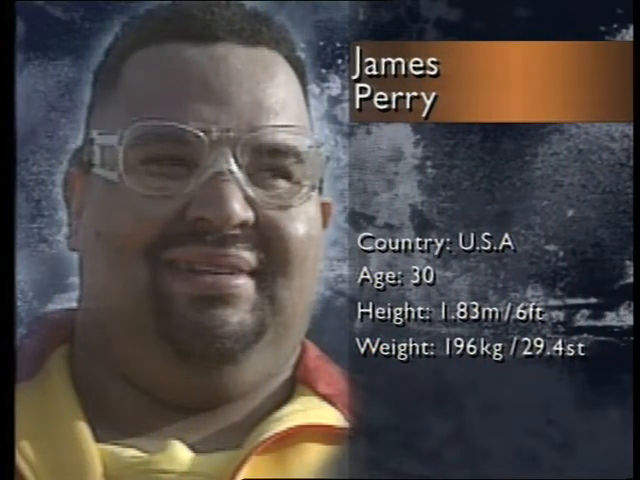
For those that aren't familiar with the archaic measurement that is the stone that some people still use for bodyweight in the UK, 1 stone is equal to 14 pounds. In speech, you'd say something like "He weighs 20 stone 7", meaning 20 stone 7 pounds. Unfortunately, the decimal notation the broadcast used here is ambiguous – 29.4st could mean 29st and 4 lb, or it could be a true decimal and mean 29st 5.6 lb (as in 0.4 of a stone). 196kg doesn't convert to 29.4 stone using either method (196kg is 30st 12 lb), so there's an error.
I went through every competitor's profile to try and figure out what happened. It turns out there were other issues – Henning Thorsen's weight in stone is slightly inconsistent with his billed kilograms – but the other eight athletes' weights in stone are all consistent with a decimal conversion from their billed kilograms, rounded to one decimal place.
So what about Perry's bodyweight? We have a few options:
- 400 lb, as stated by the commentator a couple of times in the broadcast, likely rounded to a nice round number for the commentary.
- 196kg with a completely incorrect 29.4st figure (196kg would be 30.9st as decimal, 432 lb).
- 29.4st as decimal (29st 5.6 lb, 411 lb), which converts to 186kg or 187kg depending on where you round.
- 29st 4lb (410 lb), which converts to 186kg.
Both readings of 29.4st point to roughly 186kg, so 196kg is plausibly a one-digit typo. What's interesting is that Perry's figure doesn't quite fit the pattern of the other athletes – if his weight had been supplied as 186kg and converted like everyone else's, it would have been captioned 29.3st, not 29.4st.
That makes me curious where the weight figures came from. It wouldn't surprise me if the TV production simply asked the athletes their weight. As the only American in the field, Perry would have given his weight in pounds, likely a round figure, 410 lb perhaps? Converted by hand, that's 29 stone 4, which could explain the caption's "29.4st" when every other athlete's figure is a decimal conversion from kilograms.
Perry later competed in amateur sumo wrestling, winning several North American championships. A 2001 Sumo Shimpo event report lists him at 410 lb, another report from August 1999 also lists him as 410 lb. 7-9 years is a long time, so that's not proof of his 1992 weight, but it fits with 410 lb being the number Perry gave when asked.
My hypothesis is that the WSM broadcast used James Perry's weight (in pounds) for the Húsafell Stone. If the stone was accepted to weigh 180kg at the time, a natural figure to say in commentary would have been 400 lb (180kg is 397 lb). But with a 410 lb man in the field, rounding up gave the commentator a line about Perry sitting on your chest. It wasn't uncommon for the weights of odd objects in these competitions to be rounded or exaggerated, so nudging 180kg up to Perry's bodyweight for the sake of a comparison doesn't seem out of character – Perry's size was a running 'joke' throughout the broadcast, so using him as the reference point for the stone fits the tone of the commentary.
This might just be the craziest thing I've said in research about stones. For more than 30 years, we may have believed the Húsafell Stone weighed 186kg because one-time strongman competitor James Perry's bodyweight was close enough to the stone's accepted 180kg weight and the World's Strongest Man broadcast wanted to make a joke. Perhaps I'm losing my mind and this is all coincidental, but unless we find earlier evidence for 410 lb/186kg than WSM 1992, this might actually be the explanation.
I'm aware this is long – it's actually longer than the Húsafell Stone article on liftingstones.org – so here's the summary: the 2026 weighing of 157kg closely matches the original documented 158kg measurement from over 100 years ago and seems to be correct. The 180kg figure appears to be an edit introduced in a reprint referring to the original weighing, changing 316 pund (158kg) to 360 pund (180kg), which spread to other publications and became the accepted weight of the stone. Finally, I believe the 186kg/410 lb figure came from James Perry's bodyweight at the 1992 World's Strongest Man competition – which roughly matched the accepted 180kg figure at the time – so the commentator could make a joke.
There are still some loose ends and questions I'd love to find the answer to: when did the sign first appear at the folds? And did the sign get its weight figure from the World's Strongest Man commentary?
Did Rogue actually weigh the original stone when they went to measure and scan it for their replica? With a 3D model, they should have an accurate volume measurement that they could use to get close to the Húsafell Stone's true weight. And does the replica stone they created using basalt from Húsafell actually weigh 409 lb?
I've updated the Húsafell Stone's article on the site with the updated weight.
 Dave Brown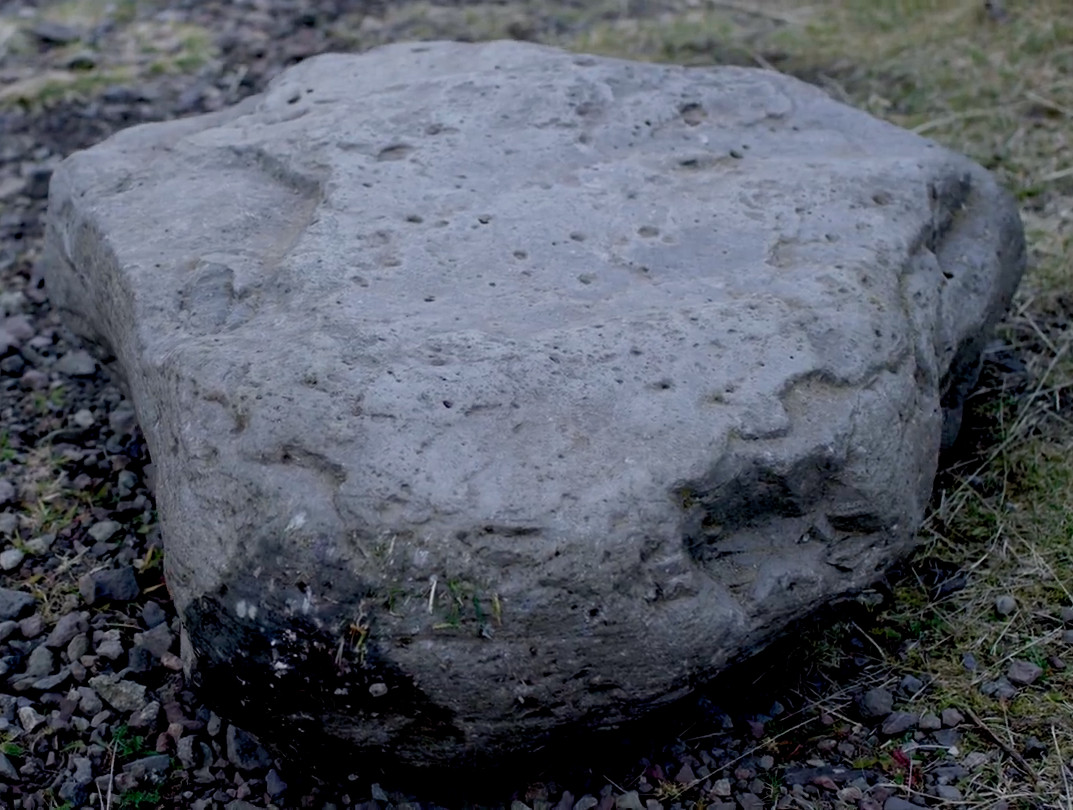
Thanks to David Nisbet for sharing extra information about the history of the stone's weight!
The Gathering X
At the start of August I went to Potarch for the 10th edition of Donald Dinnie Day: The Gathering. The first thing I noticed as I crossed Potarch Bridge was the scale of the event compared to the last time I attended in 2024 – more food options, activities like arm wrestling and stonelifting for all ages, and companies like Smash & Pass and Cerberus selling their goods.
Like previous editions, the event kicked off at midday with a bagpipe-led procession around Potarch green before a short speech by Malcolm Nicol (the event Chieftain) and the first event of the Donald Dinnie Games & Jan Todd Games.
Legends like Jack Shanks – the first man to lift the Dinnie Stones without wrist straps – and Jan Todd, the first woman to lift the Dinnie Stones, were both present for the 10 year anniversary, which was wonderful to see.
This time round, I decided to enjoy the day, rather than think about putting together a story like I did in 2024. As always, I loved watching the stonelifting competitions, but especially loved seeing the individual Dinnie Stones lifts.
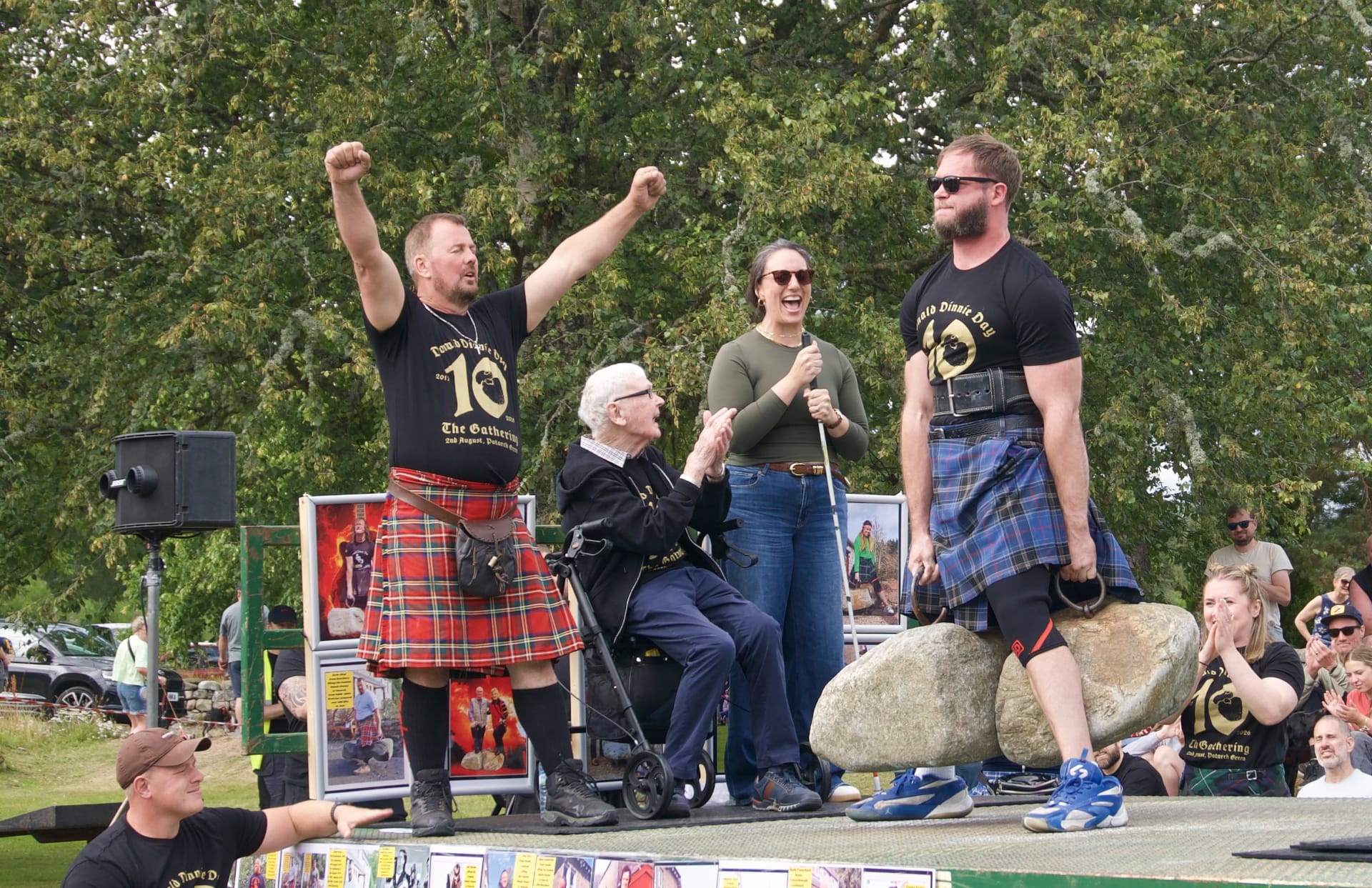
More than 10 athletes put their names in the history books on the stage on the edge of Potarch Green, with plenty of applause and celebration! I have decent photos of most Dinnie Stones lifters from the day – if you lifted and want one of the photos, send me an email and I'll send them over.
Sandra 'Sunny' Bradley defended her Jan Todd Games title, while Jack Brown became the new Donald Dinnie Games champion! Winning here qualifies them both for the World's Strongest Stonelifter competition in 2027.
Here are the podiums for the Donald Dinnie Games:
- Jack Brown
- Kyle Scott
- Harry Reeve
And the podium for the Jan Todd Games:
- Sandra 'Sunny' Bradley
- Izzy Tait
- Pauline Mass
Both competitions were great fun to watch right up to the final stone on the barrel – everyone gave it their all! And the whole event wouldn't have been possible without the organizers and the volunteers who make it all happen, so a huge shout out to them as well.
Each time I've been to The Gathering, I've noticed the crowd starts thinning before the final event of the games, which is a little disappointing since that's when the athletes need the most support. I wonder if the whole event is a little long for some people (about 6 hours) and whether a slightly earlier start would help?
Donald Dinnie Day: The Gathering 11 will take place on the 8th of August 2027!
Latest articles
 Calum Stott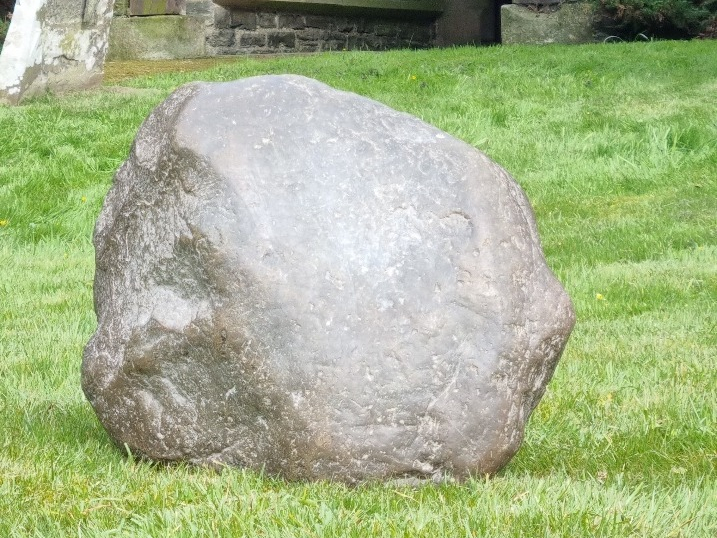
 David Brodlie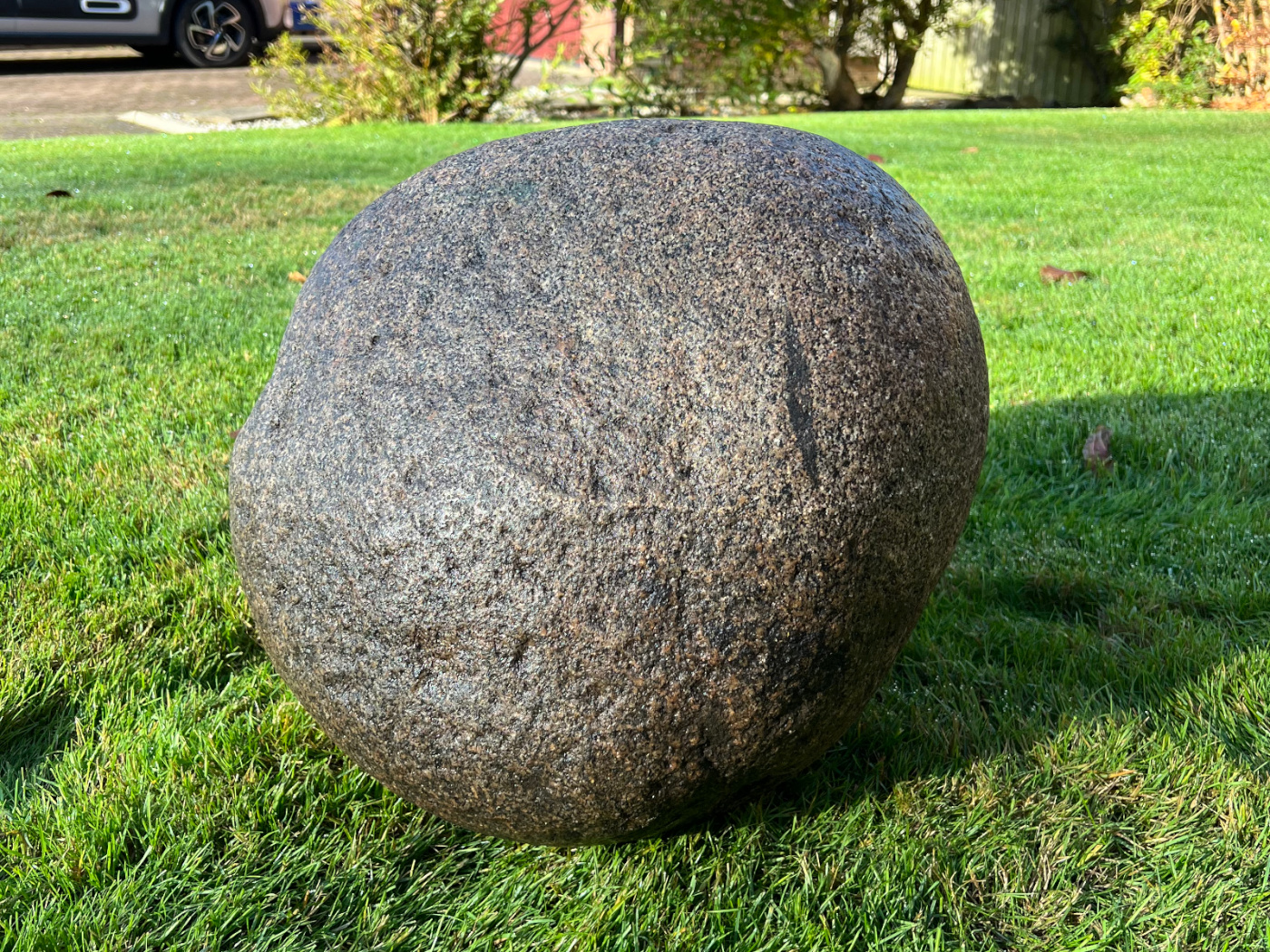
liftingstones.org shop
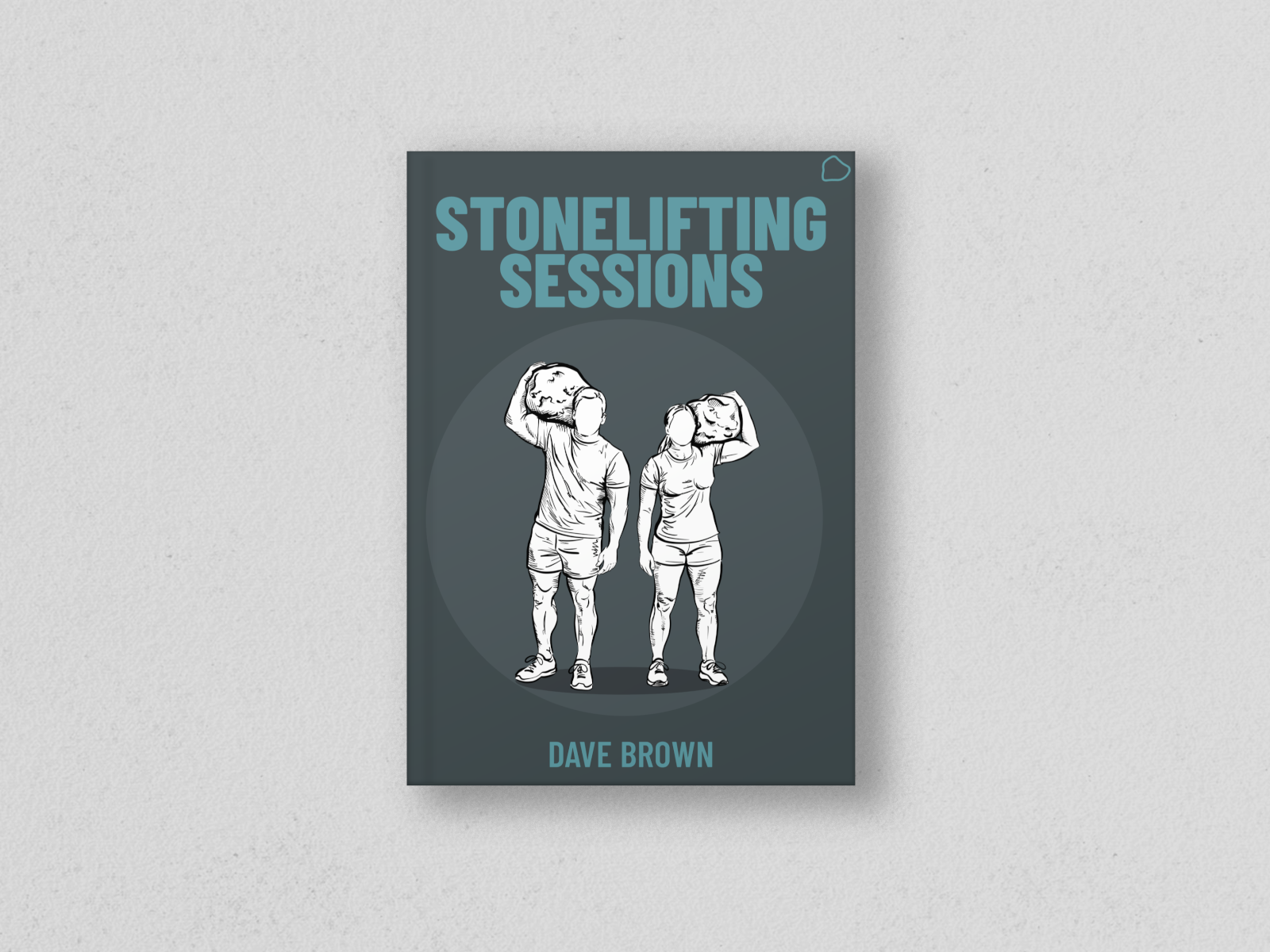
Stonelifting Sessions ebook
Add stones into your training and become a stronger stonelifter using 50 plug-and-play stonelifting sessions.