A historic change to Swiss Steinstossen
After last month's newsletter and the work that led up to it I still had momentum (and some extra time), so I took advantage of that to build some cool features for the site that have been on my to-do list for a while. In fact, these changes have turned into one of the biggest site updates ever! Was I procrastinating on research for an article? Maybe... Meanwhile, Daniel Kranzelbinder shares some historic and controversial news from the world of Swiss Steinstossen.
Here's your list of this letter's topics, feel free to jump to the ones that interest you most:
- Swiss stone putting reinvents itself: 86kg stone to replace Unspunnenstein
- liftingstones.org website updates
- Directory updates
- Map changes
- Article search
- Books section
- Stonelifting in the New York Times
- More Húsafell stone weight updates
- Looking for an artist
Swiss stone putting reinvents itself: 86kg stone to replace Unspunnenstein
Few sporting implements carry as much weight, literally and figuratively, as the Unspunnenstein. Since the first Unspunnen festival in 1805, the granite boulder has been the benchmark of Swiss stone putting. Stolen, held “hostage” and returned, it has become a national symbol of Switzerland. Now the sport is turning a page. On 26 October 2026, the Swiss Wrestling Association (ESV) announced that a new stone will replace the Unspunnenstein at the Eidgenössisches Schwing- und Älplerfest (ESAF) – the Federal Alpine Games – the biggest stage Swiss traditional sport has to offer.
Meet "The Eidgenoss"
The new stone will be called ESV EIDGENOSS 86, or just "The Eidgenoss". In Swiss wrestling (Schwingen), Eidgenoss(e) is an honorary sporting designation reserved for wrestlers who have won a wreath (Kranz) at the Eidgenössisches Schwing- und Älplerfest (ESAF). The title is particularly prestigious because the ESAF ordinarily takes place every three years, and only a relatively small proportion of participating wrestlers receive a federal wreath. A wrestler who wins one becomes an Eidgenosse for life, even after retiring.
The number denotes the stone's weight – 86kg (189.5 lb). 2.5kg (5.5 lb) more than the Unspunnenstein. Athletes may continue put it however they like, from a standing position or with a run-up. From now on the Unspunnenstein will be reserved for the Unspunnen festival itself.
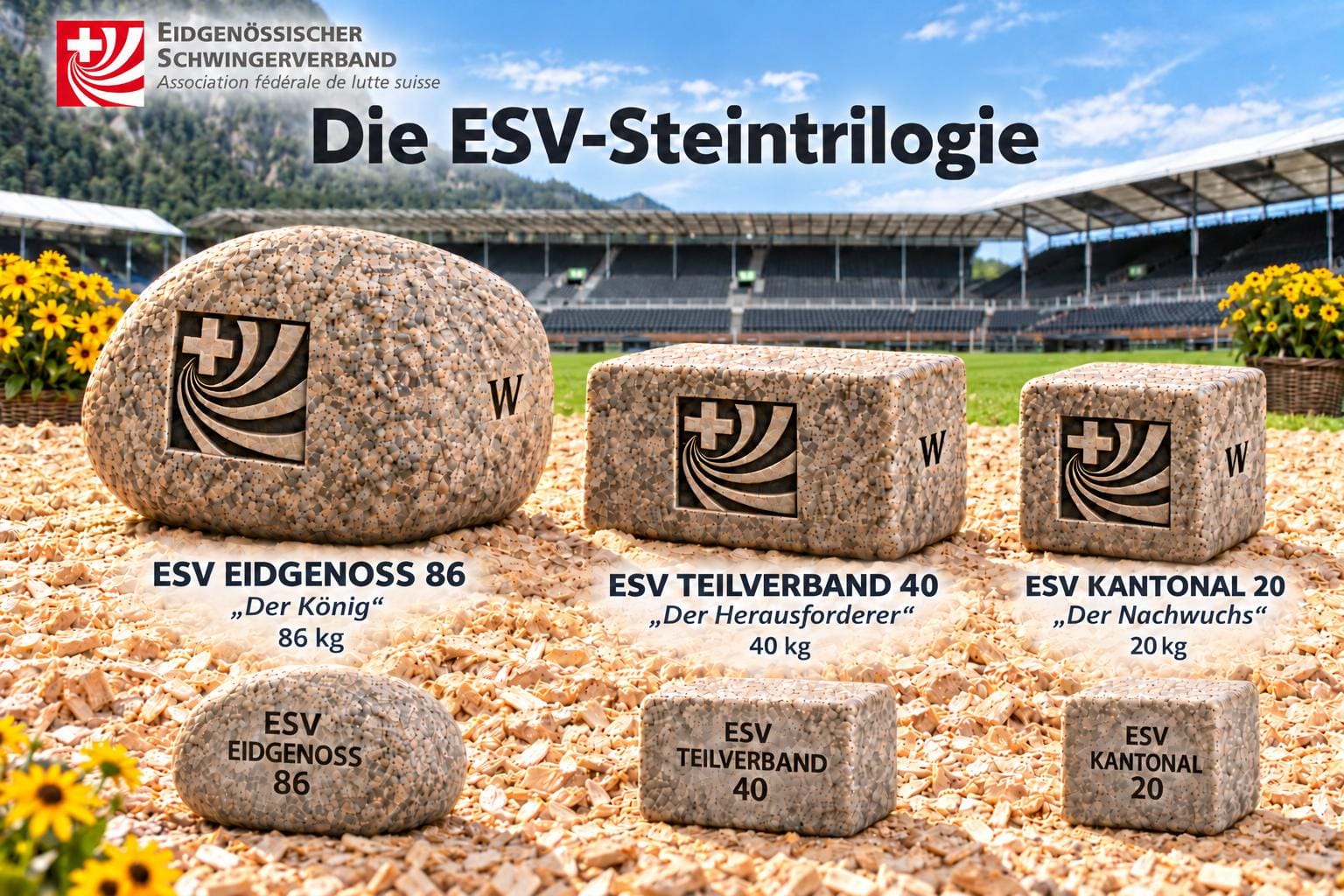
Alongside the new 86kg Eidgenoss, the Swiss Federal Wrestling Association is also acquiring the 40kg (88 lb) Challenger (to be put from a standing position with one hand) and the 20kg (45 lb) Youngster (put with run up with one hand). These stones match the weights of stones already used at the ESAF. Their acquisition is thus not introducing new weight categories or disciplines, but rather reflects the Federation’s robust commitment to purchasing and maintaining its own stoneputting equipment.
Stoneputting has become an elite sport
Performances have exploded over the past 15 years, so the ESV’s argues: "today’s stone putters are stronger than their predecessors, and the challenge should grow with them." When Peter Michel won the ESAF title in 2010, 3.69 metres was enough for victory and 3.47 metres earned second place. At the 2025 ESAF in Mollis, twelve athletes reached that second-place mark or better. Urs Hutmacher won the qualification with a record 4.16 metres, and three athletes reached 3.90 metres in the final. Three puts went beyond four metres in Mollis. In the 220 years before, there had been only one: Markus Maire’s 4.11 metres at the 2004 ESAF in Lucerne.
The jump can be put down to growing professionalism: meticulous preparation, veterans coaching the next generation, and officials creating and standardising competitions. Stone putting has become an elite sport and a heavier stone is a logical next step.
Back to the roots
There's a historic argument for the change too. An 86kg stone is closer in weight to the original 1805 Unspunnen Stone than the current one is. Historical records put the first stone at between 167 and 184 Bernese pounds. At roughly 520 grams per Bernese pound, that is somewhere between 86 and 96 kilograms (189.5 lb and 211.5 lb). So, the new stone will honour an earlier and arguably more traditional put.
Stone putting is one of Switzerland's national sports and gets plenty of media coverage at every ESAF. This change helps send a message that Swiss stone putting is much more than just the Unspunnenstein, and gives the sport a new showpiece rooted in its own history. At the same time, throwing the Unspunnenstein will become a rarer event, elevating it to a new level.
Criticism from the athletes
A new stone can replace the weight, but not the history.
- Pro Unspunnenstein am ESAF paper, October 29 2026
Understandably, not everyone is convinced. A group of stone putters delivered a letter to the ESV a few days after the press release making the case for keeping the Unspunnenstein at the ESAF. Their central argument is continuity.
"For generations", they write, "the best athletes have measured themselves against the same challenge, which makes records comparable across decades". A new stone “starts practically from zero”. The Unspunnenstein earned its legendary status over more than 200 years, and no newly cut block of granite is likely to match that. For spectators, the Unspunnen Stone is part of the ESAF’s identity, much "as grass belongs to Wimbledon or cobblestones to Paris–Roubaix". Critics also point to the timing of the announcement. The next ESAF, in 2028, takes place in Thun in the Bernese Oberland, the Unspunnen Stone’s home turf. To be replaced and miss its "home game" adds salt to the wound. Athletes, they add, would have far fewer chances to put the Unspunnen Stone during their careers, while many took up the sport because of it in the first place.
Among the critics is Urs Hutmacher himself, the record holder with the Unspunnenstein, who has spoken out against the decision. When the man who has put the stone further than anyone in its history objects, this is clearly more than nostalgia.
Final thoughts
My own engagement with the Unspunnenstein, whether as a writer or as a competitor, has been driven by the conviction that sporting traditions are not the prerogative of nostalgia. Tradition, as I’ve argued, is not a museum piece to be defended against change exactly as it is. Traditions aren't the opposite of progress. They are progressive in themselves, more like skills passed down through generations.
Judged this way, I think this new 86kg stone holds up. As a sport of tradition, stone put places the emphasis on the act of passing things on rather than on preserving what is passed on – the current Unspunnen Stone is one of multiple replicas from over the years. What generations of stone putters have handed down is not a particular block of Bernese granite, but the skill to put a stone further than anyone before them. That is what athletics is about: improving on one’s own performances and on those of others.
The explosion in performances at Mollis in 2025 shows that this improvement is in full swing. If athletes are growing with the stone at this rate, giving them a heavier stone – and one closer in weight to the original – may be more faithful to our tradition than freezing it at 83.5kg forever.
Nevertheless, Hutmacher and his fellow critics have a point. A “Traditions-Sport” lives through its landmarks. Because the same stone has been put for more than two centuries, the sport’s history is present every time someone lifts it, and every putter has been able to measure themselves against it. That is where much of its pull comes from. A new stone cannot inherit that history, but it can earn its own and take the sport to new heights. The verdict will come in Thun in 2028, when “The Eidgenoss” makes its debut.
liftingstones.org website updates
Directory updates
The first big updates to the website relate to the stone directory.
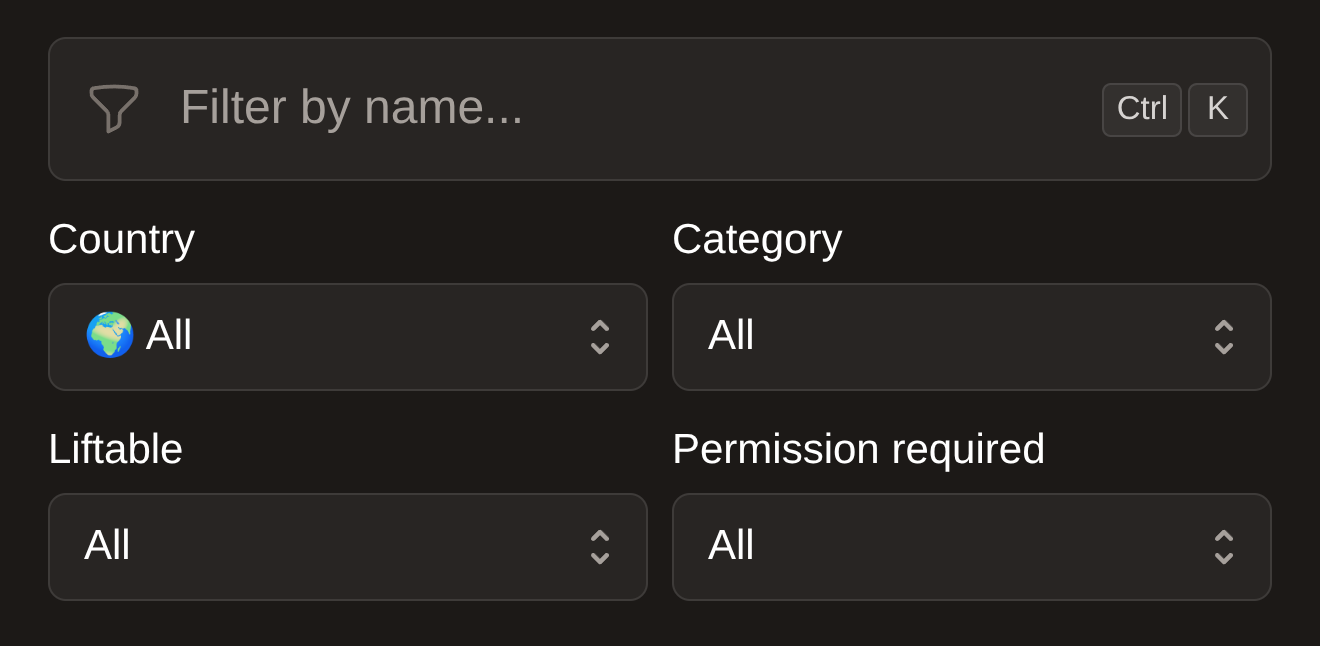
On larger screens, you will notice the table is no longer constrained to a fairly narrow width – the table and all the filters have much more room to breathe. You will also notice new column for 'Permission required' on larger screens, too. Like the 'Liftable' column, the new 'Permission required' column shows whether you need to seek permission for a particular lifting stone using the following symbols:
- ✓ (permission required)
- ✕ (permission not required)
- ? (unknown)
- N/A (the stone isn't liftable)
Additionally, there's a new dropdown to filter permissions so you can exclude certain stones, even if your screen isn't wide enough to show the column in the table.
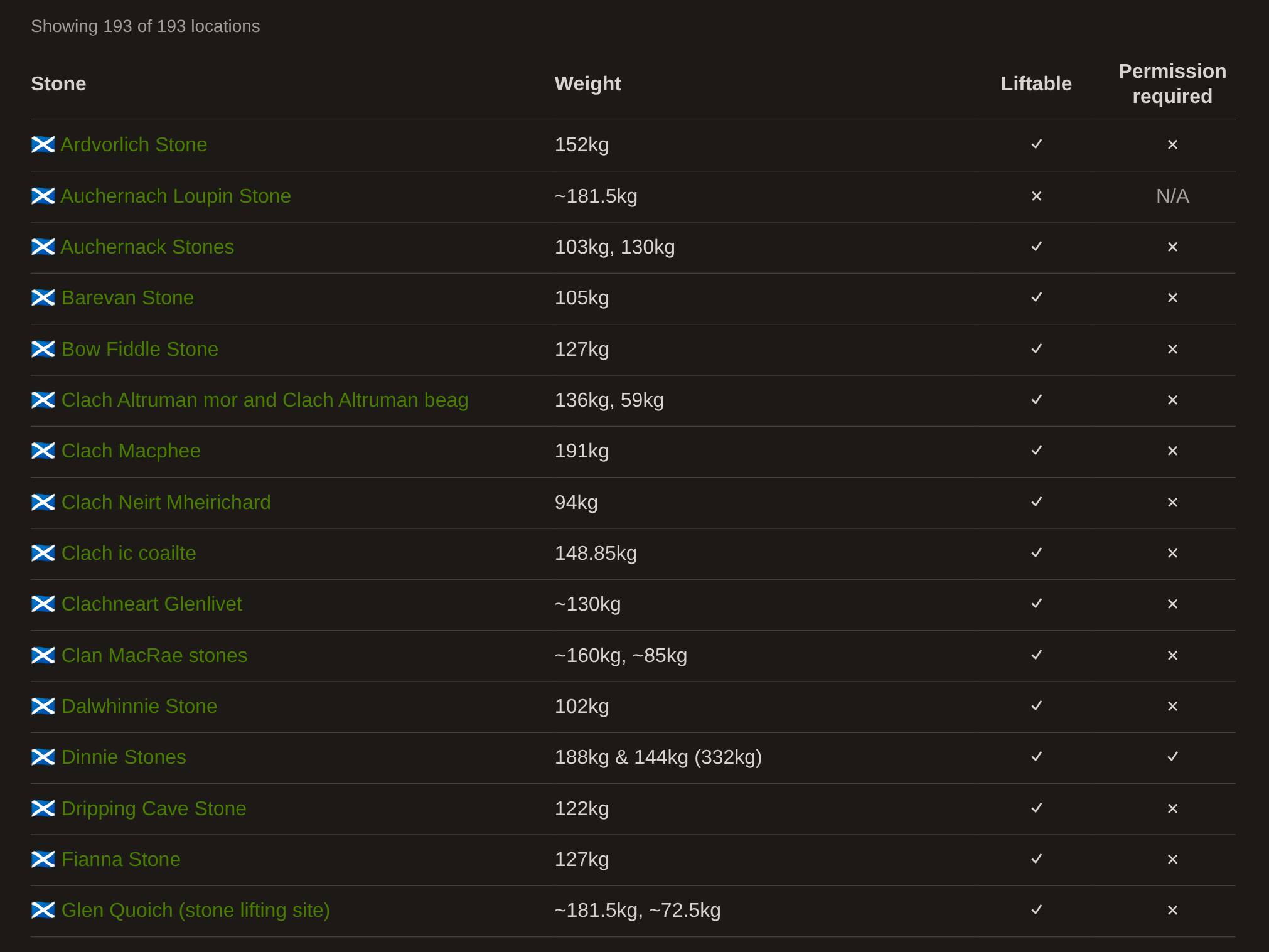
Speaking of filters, I've updated the filter dropdown selectors to be a little clearer by making sure they all have a label. I've also changed the name of the 'Search' box to 'Filter by name', since that's a more accurate description of what it does.
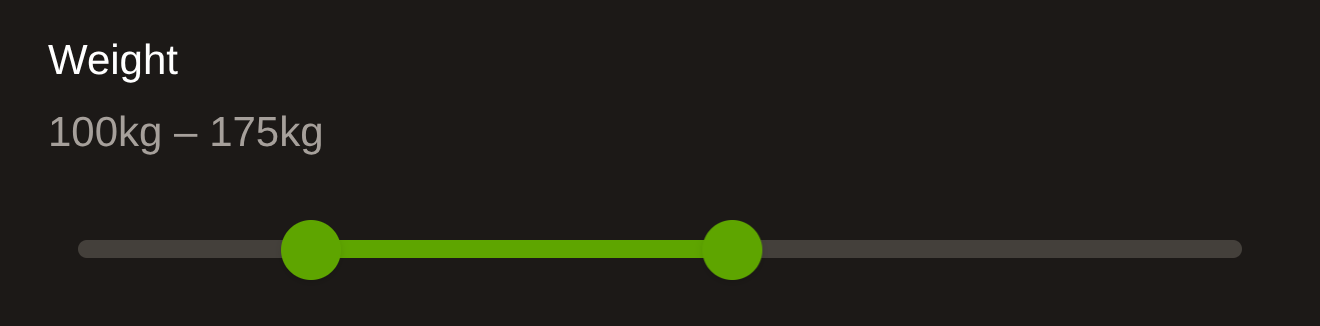
Next is a brand new filter that allows you to select stones within a weight range using a slider. It's self-explanatory – move the slider to set an upper and lower weight bound for the stones in the directory. Along with all the other filters, it's now incredibly easy to view a set of lifting stones tailored to your specific criteria.
A feature I've wanted for a long time (and I know many others will appreciate, especially my American friends) is a units toggle! By default the stone directory and the map will show weights in kilograms only, but the new units toggle allows you to set the weight units to pounds! Your choice saves between visits, so you shouldn't have to set it again.
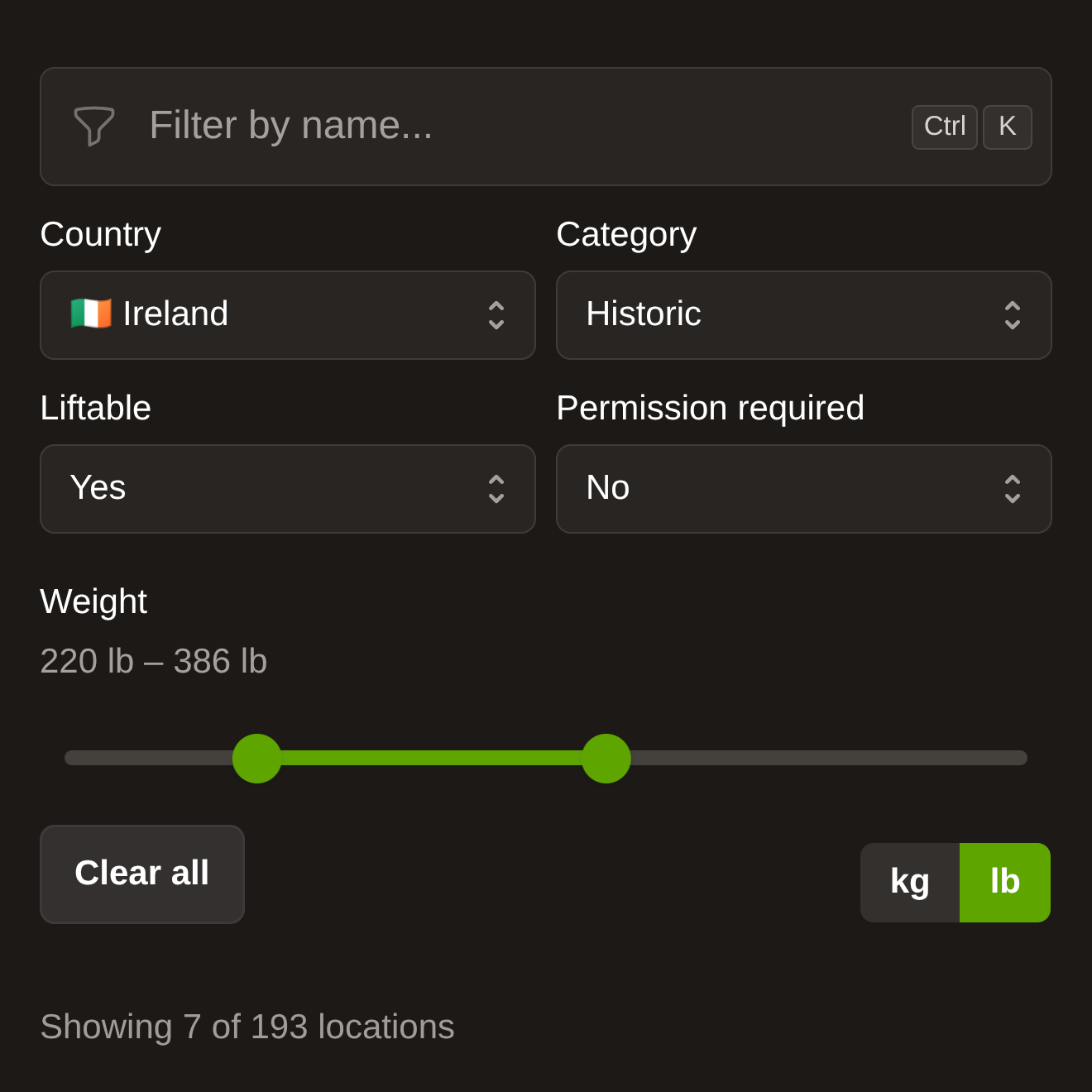
Beyond just feeling nicer seeing only your preferred units, this also makes the table's weight column far less busy and overwhelming compared to listing every weight in two units. Having said that, units in articles and elsewhere on the site will still keep the same format.

Map changes
The next big changes are on the liftingstones.org map. First off, the map carries over changes from the updated stone directory – you can filter using the new weight range slider and you can toggle units in the map's filter drawer. The drawer also gets some new styling!

The main changes to the map – and the reason I started working on these updates in the first place – came because I got frustrated when using the map on my phone in the summer. Whenever I'm on the liftingstones.org map, I'm more often than not on my computer, rather than my phone, so when I used it on my phone for the first time in a while the behaviour of the popups bothered me – they were awkward to view, ugly, and often opened with a ton of information off the edge of the screen.
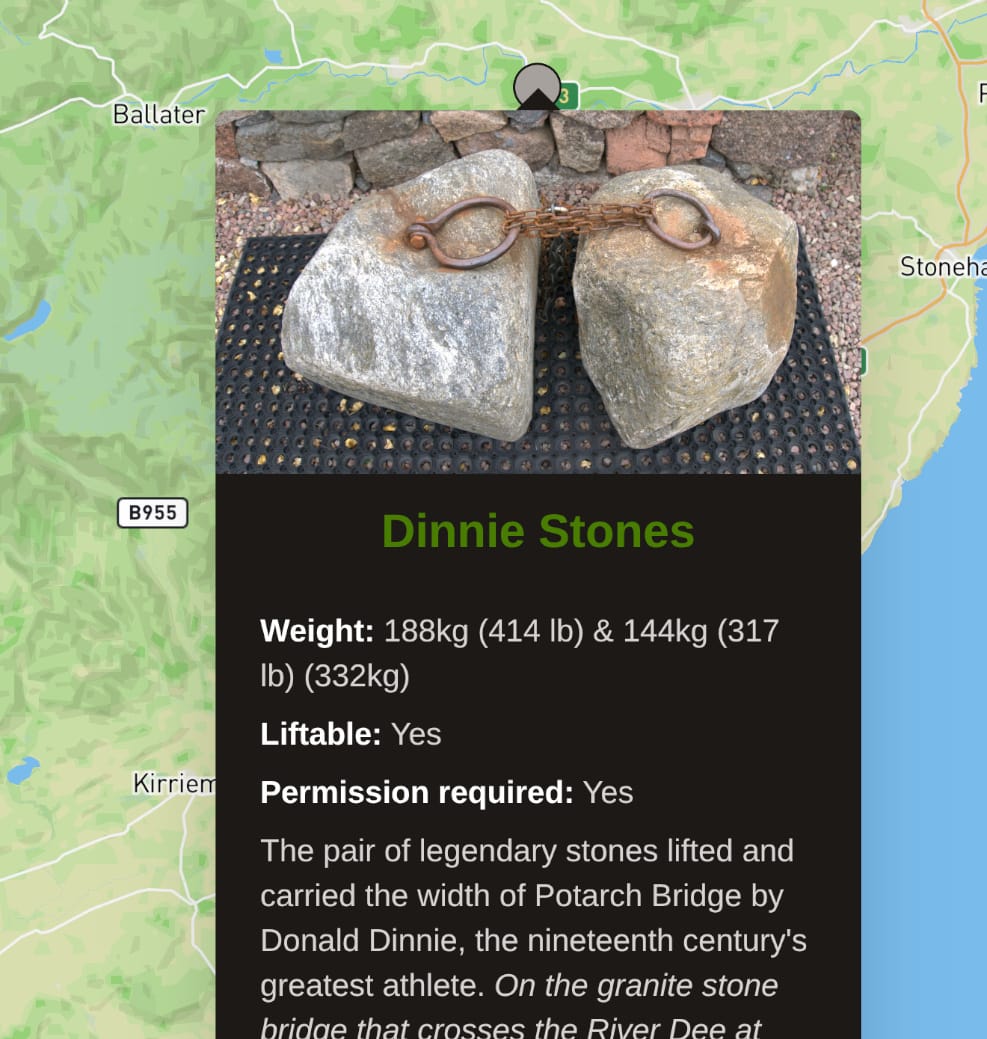
Popups now have a much friendlier style with stronger information hierarchy and structure. Stones with more detail use scrollable areas rather than extending forever and feeling clunky.
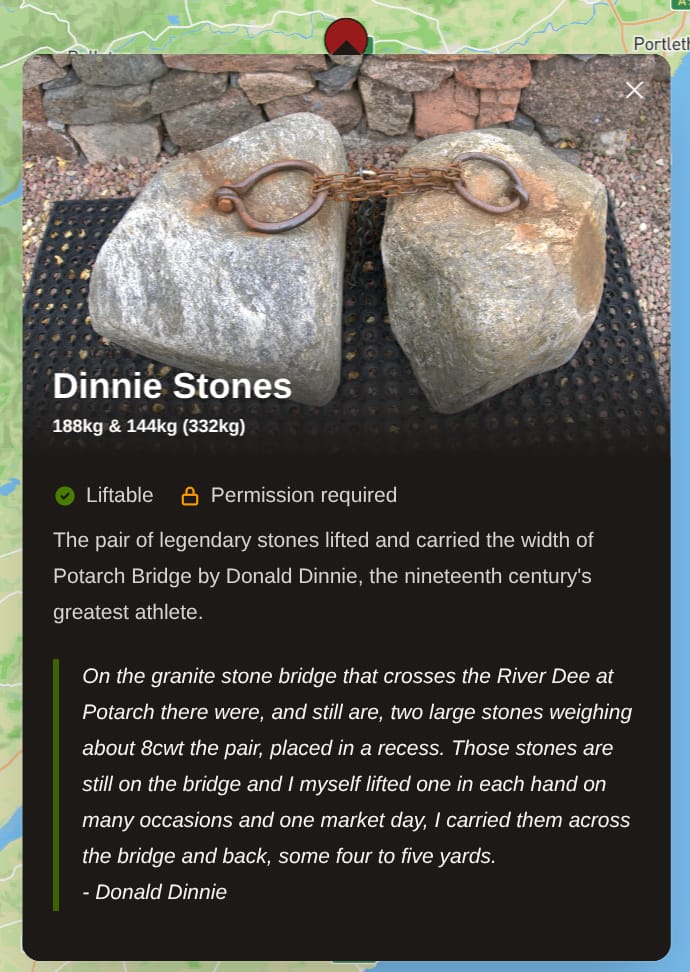
Popups look so much better and make the map experience feel more polished and enjoyable.
On small screens map popups have new behaviour. Instead of the stone information popping out of the marker (often placing content off the edge of your screen), they now always appear on the bottom of the screen. The map's focus will move to the centre of the circle marker, and the circle will grow and change colour to highlight that it's the stone you selected.
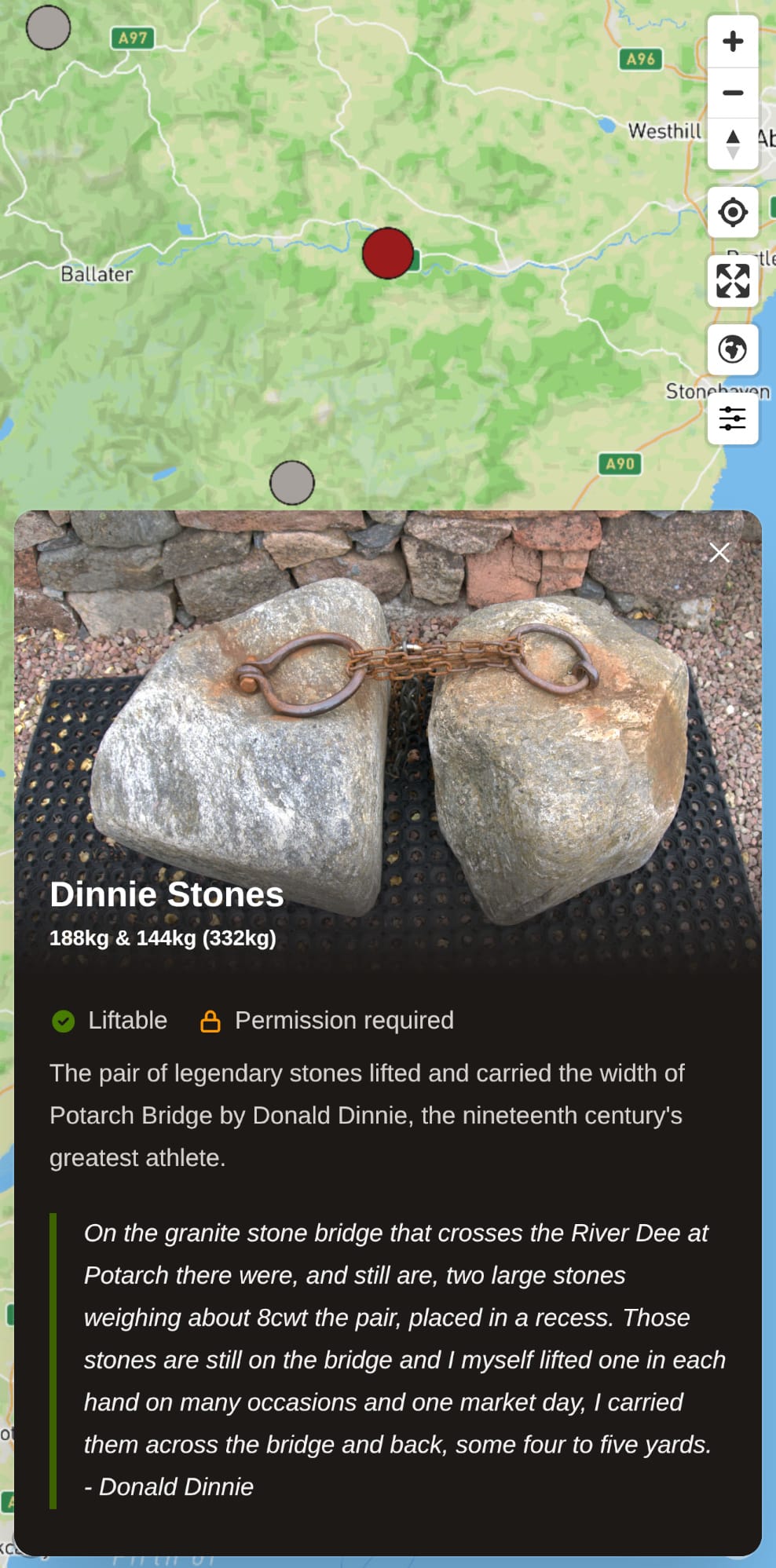
Map markers have grown slightly to make them easier to tap on your phone, too. All of these changes and adjustments should make finding the right stones for you far easier!
The map gets even better on your phone if you use web app mode. In web app mode, the site can take advantage of the whole screen because it removes the browser's search bar and other screen elements from the top and bottom of the display. To use app mode, follow this guide for iPhone, and this guide for Chrome on Android.
It took a lot of work to build the new system behind the map and directory functionality, and a ton of time tweaking the styling, but I'm quite happy with how it turned out. If you have any feedback or suggestions, or if you run into any issues, please let me know!
Article search
This is something I've wanted for way too long but never had the time to explore or implement. But now that there are over 50 articles on the site, I've finally added a search bar to the article list page to help find the article you're looking for, instead of needing to scroll your way through each page in the list.
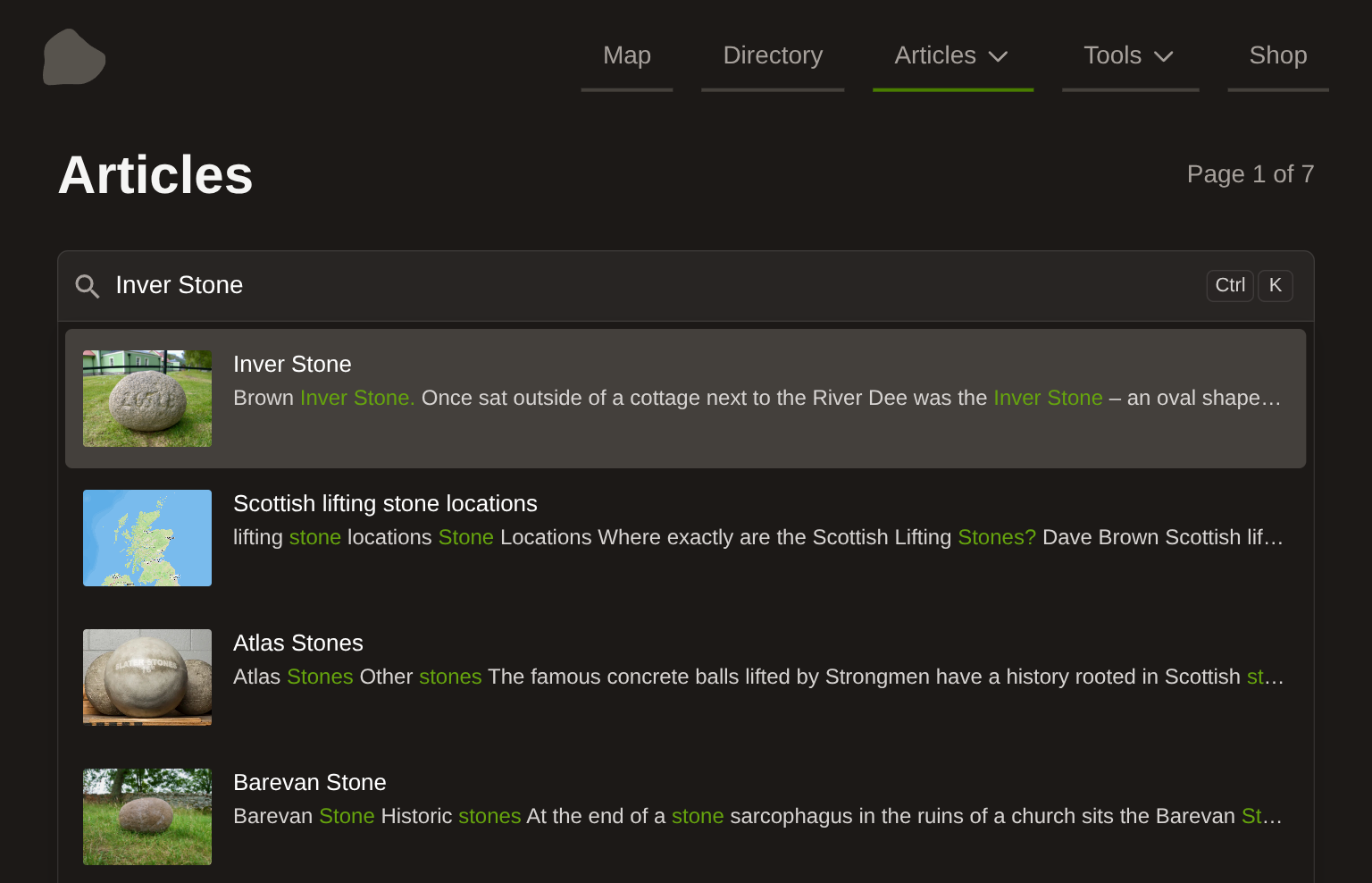
You can search using any text: a stone's name, words that appear in an article, and so on. For instance, if you search "Inver Stone", you'll see find the Inver Stone article as well as other articles that contain mentions of the Inver Stone.

Books section
Like the Documentaries page I added last year to highlight and document various stonelifting documentaries, I've created a new Books page with a list of books about stonelifting.
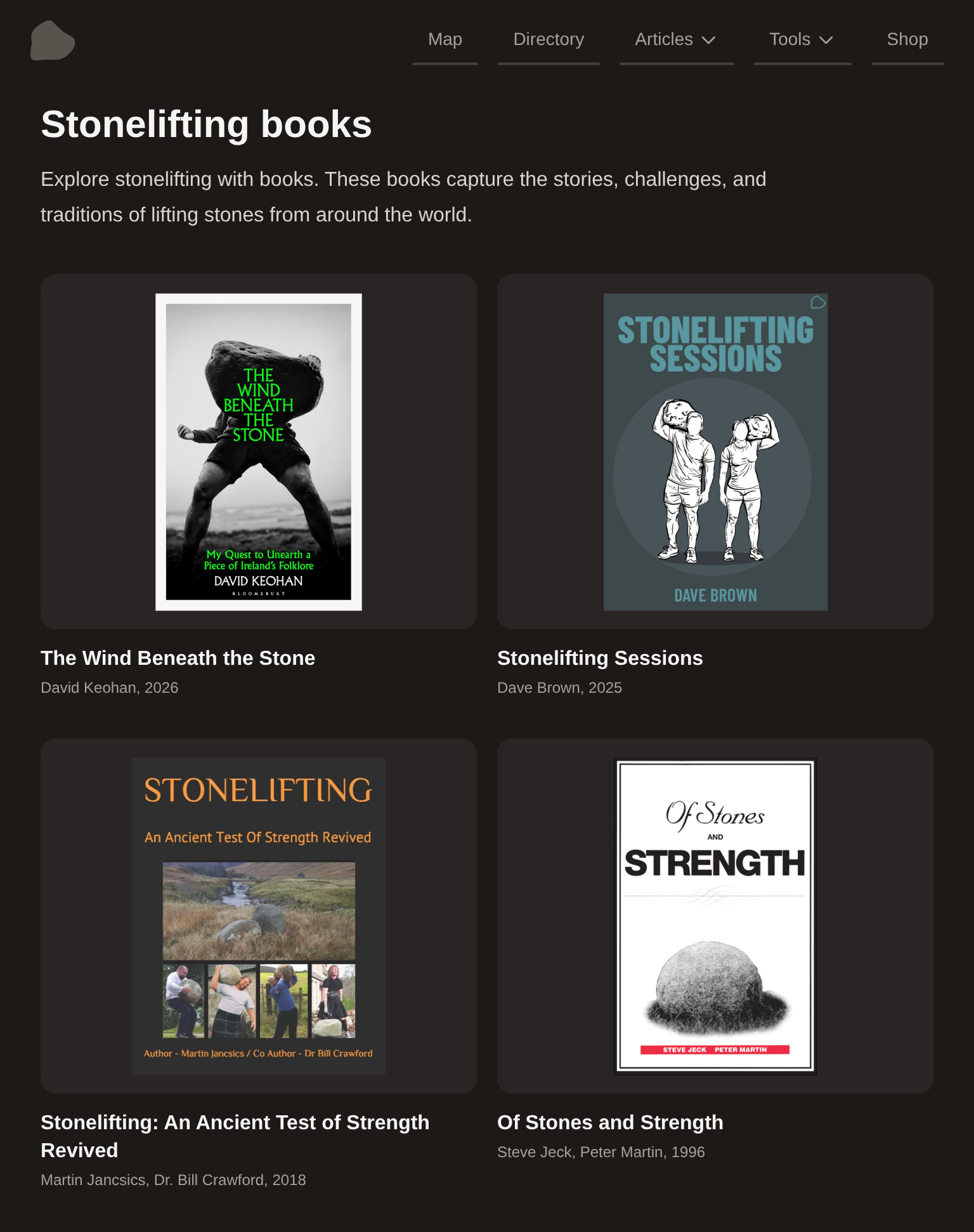
It's not an exhaustive list (I'm unsure whether to include books that mention stonelifting that aren't books about stonelifting), but it should be a useful resource for people looking to find information about the popular books on stonelifting and where to buy them. Additionally, liftingstones.org is now an affiliate of Bookshop.org and Amazon.co.uk, so may earn a commission on qualifying purchases.
I made a bunch of other small updates across the site, but they're not worth pointing out here, so we'll stop there. As always, you're always welcome to email me with feedback and suggestions.
Stonelifting in The New York Times
At the start of October The New York Times published an article by Alyssa Ages highlighting strength tests from around the world, including Scotland, India, and Japan.
While the article is relatively short and light on detail, it mentions stoneputting at Scotland's highland games and stonelifting at shrines in Japan with Sakamoto Yuta, who you may have seen lifting on Instagram. There are some particularly nice photos and short video clips.
Húsafell Stone weight updates
Last time, I wrote about the Húsafell Stone's weight. Since then, more information about the stone's recorded weight has been uncovered, showing Kristleifur Þorsteinsson amended the stated weight from 1923 in 1932, so he was confident in the 360 pund weight for years. The new information doesn't change my story too much, but I wanted to point out that I've updated the story with the new details.
Searching for an artist
I've been thinking about some projects for liftingstones.org that need artwork, but I'm not an artist, so I'm looking for someone open for commissions. I've worked with artists before on the Dinnie Stones enamel pin design and the Stonelifting Sessions book cover. If you're an artist, or you know someone who might be a good fit, I'd love to hear from you.
Digital media preferred, and I'm open to all sorts of styles at this stage. I'm specifically looking to work with a human artist, so no AI-generated work, please.
Please send a link to your portfolio, a little about how you like to work, and a rough idea of your rates and availability. Contact me through the email address on the liftingstones.org contact page.
Latest articles
 Calum Stott
 David Brodlie
liftingstones.org shop
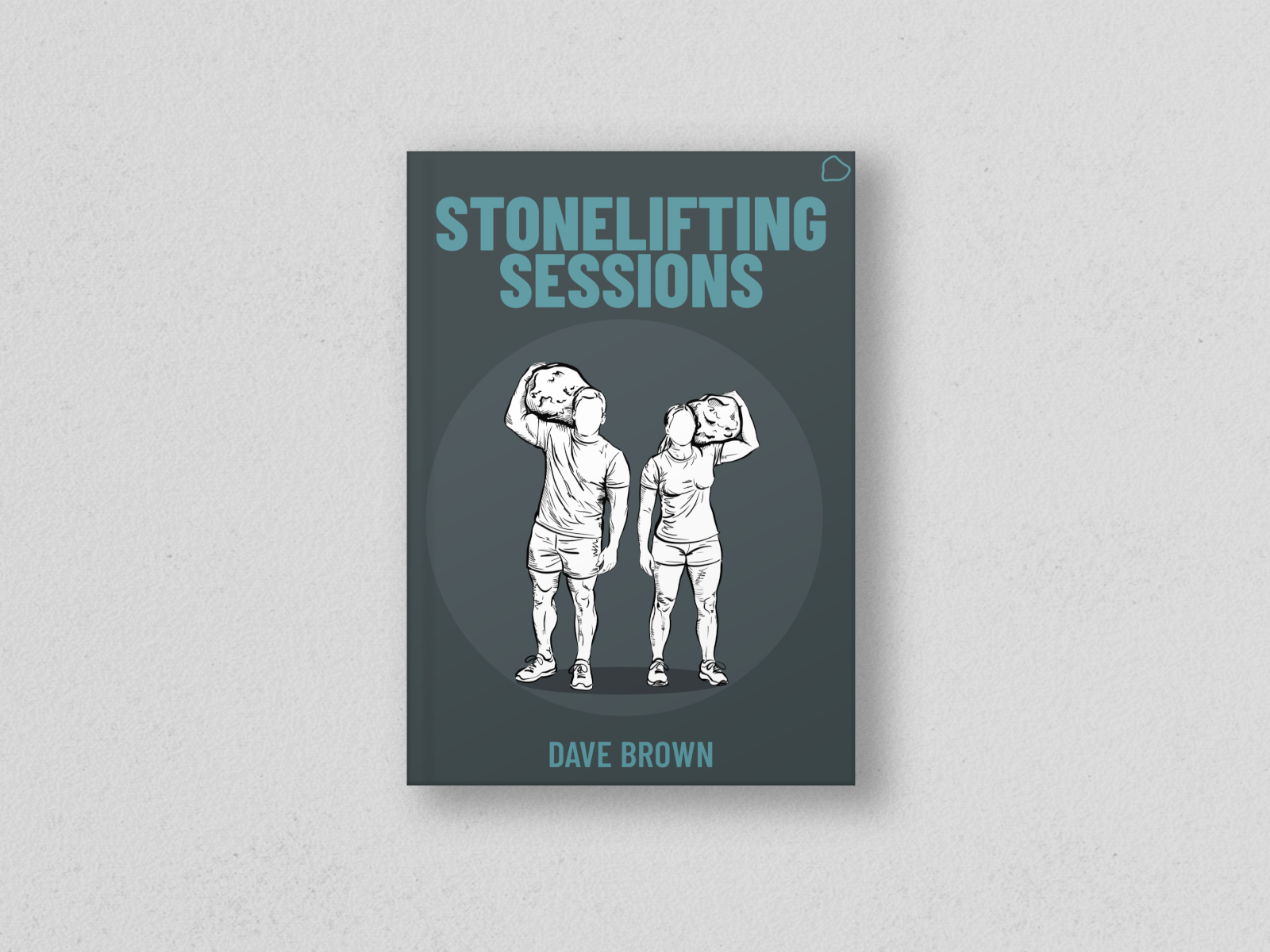
Stonelifting Sessions ebook
Add stones into your training and become a stronger stonelifter using 50 plug-and-play stonelifting sessions.